7 Ways to Reduce Refrigerated Transport Downtime
Last Updated: October 25, 2026
Quick Summary
To reduce refrigerated transport downtime, build an interval-based preventive maintenance schedule tied to specific components, run a pre-trip checklist before every load, and use real-time temperature monitoring with alerts. Measure downtime hours, failure frequency, MTTR and MTBF monthly, then fix root causes instead of symptoms.
Set service intervals by run hours, not just miles, since idling reefers still accumulate wear.
Inspect belts and tensioners roughly every 1,000-1,500 run hours at each PM service.
Pre-cool the trailer before loading and keep cargo off the return air path for airflow.
Track downtime hours, failure frequency, MTTR and MTBF per unit and per fleet monthly.
Keep a 24-hour repair contact saved in every cab as part of a contingency plan.
Table of Contents
Why Refrigerated Transport Downtime Costs More Than the Repair Bill
A failed reefer unit is never just a repair ticket, it is a cold chain break, and a revenue problem.
Refrigerated transport downtime is the total time a temperature-controlled unit sits out of service, from failure to return.
At Platinum Transport Refrigeration Services, we see it constantly: fleets that treat maintenance as a cost center spend far more than fleets that treat it as insurance.
The Hidden Costs of a Failed Reefer Unit
Most managers track the invoice, not the full picture. When a unit goes down, the damage stacks up fast:
Spoiled perishable goods that fail food safety standards and get rejected at the dock
Late deliveries that trigger penalties or lost contracts
Emergency spot repairs that cost more than planned service
The fix is not one big change but seven small ones, stacked. Here is how to reduce refrigerated transport downtime step by step.
Step 1: Build a Transport Refrigeration Unit Preventive Maintenance Schedule
A transport refrigeration unit preventive maintenance schedule is a calendar of planned inspections and service tasks that catch problems before they cause a breakdown.
Reefer units tend to fail in a predictable order: belts and tensioners, then door seals, then refrigerant charge, then pricier components. Targeting those wear items on the right cadence prevents most unplanned breakdowns before they strand a load.
Build the schedule in five moves
Inventory every unit by make (Thermo King, Carrier Transicold, and similar), model, age, and duty cycle. Multi-stop grocery routes rack up door cycles and compressor starts far faster than single long hauls.
Set intervals by hours run, not just miles. Engine-driven reefer units wear on run hours; a truck that idles in traffic can hit a service interval while barely moving.
Tie each interval to a specific component. Do not schedule "inspection", schedule belts, filters, refrigerant, seals, and sensors separately so nothing gets skipped.
Book heavy service in the slow season so peak weeks stay covered and units are not pulled from revenue lanes for planned work.
Log every task and finding so patterns surface, a unit that eats belts every quarter is telling you something.
A practical interval framework
Use these as starting points and tighten them for older equipment, high-duty cycles, and summer heat:
Component | Typical inspection cadence | What you are looking for |
Belts and tensioners | Every PM service, roughly every 1,000-1,500 run hours | Cracking, glazing, misalignment, pulley wear |
Door seals and gaskets | Monthly visual, quarterly detailed | Gaps, compression loss, torn gaskets that leak cold air |
Refrigerant charge and leaks | Every PM service | Low charge, oil traces at fittings, pressure drift |
Filters and coils | Every PM service; clean coils more often in dusty lanes | Clogged condenser coils that raise head pressure and shorten compressor life |
Defrost system | Quarterly, and any time you see ice buildup | Failed heaters, stuck termination sensors, blocked drains |
Temperature sensors and data logger | Quarterly calibration check | Drift that makes the unit read cold when it is not |
Compressor and drive components | Per manufacturer schedule, tightened on high-hour units | Noise, vibration, oil condition |
Pro Tip A unit running short-distance transport in summer heat needs a tighter interval than a newer one on nighttime routes. Short-haul duty cycles mean more door openings, more compressor starts, and more heat gain per mile, the wear adds up faster than the odometer suggests.
The older the equipment, the tighter the interval. Pair a written schedule with real troubleshooting knowledge; our transport refrigeration maintenance blog covers Thermo King and Carrier insights to build a smarter plan.
Failure modes the schedule is designed to prevent
Belt failure mid-route, the most common cause of a unit that suddenly stops cooling. A tensioner check at every PM catches it.
Refrigerant leak, slow leaks show as gradually longer pull-down times before they become a full failure. Pressure checks at each service catch the trend.
Fouled condenser coil, dust and road grime raise head pressure, force the compressor to work harder, and shorten its life. Coil cleaning is cheap; compressor replacement is not.
A schedule is only as good as its follow-through. Assign an owner per interval, keep the log visible to drivers and technicians, and review it quarterly against actual failures. When a breakdown happens, ask which scheduled task would have caught it, that tells you where to tighten the program.
Step 2: Use a Reefer Maintenance Checklist Before Every Load
A reefer maintenance checklist is a short, repeatable pre-trip inspection run before each load. It takes minutes and catches the failures that cost hours.

Run this before the wheels roll:
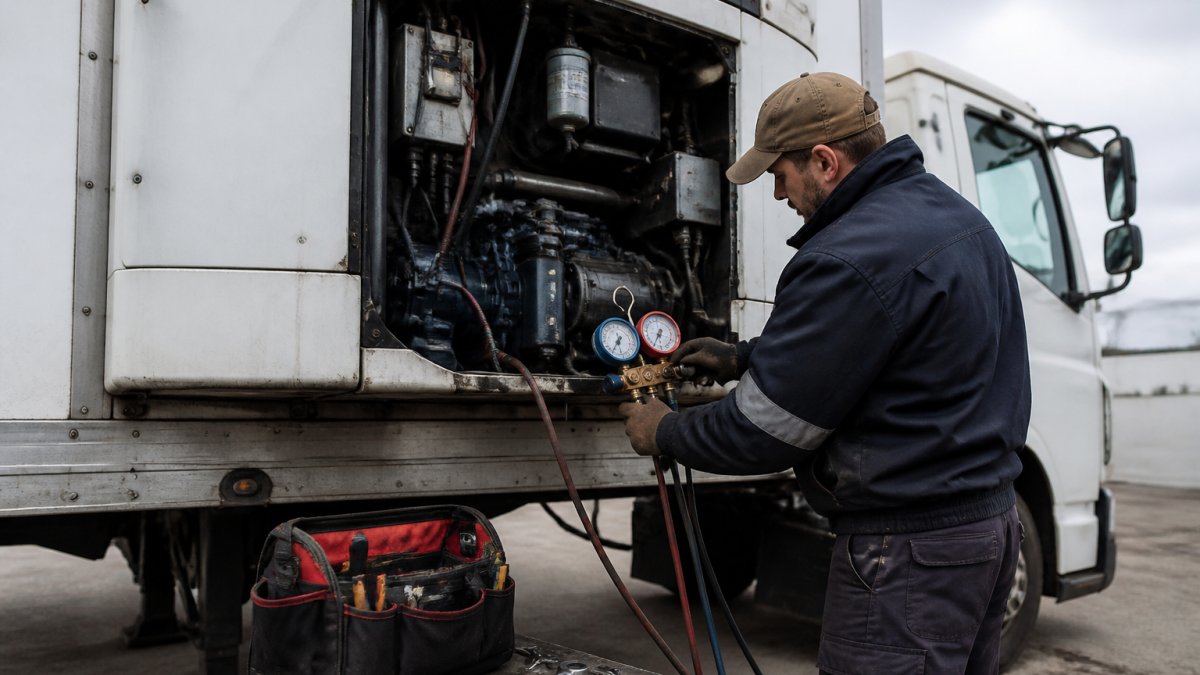
Check refrigerant levels and look for leaks
Inspect belts and hoses for wear or cracks
Test the unit in both cooling and defrost modes
A common mistake is skipping the checklist on short runs. Short-distance transport feels low-risk, so drivers rush. But a unit that fails five miles from the dock still spoils the load.
Step 3: Set Up Refrigerated Truck Temperature Monitoring and Alerts
Refrigerated truck temperature monitoring tracks internal temperature in real time and alerts when it drifts out of range, turning a silent failure into a fast response.
Modern telematics and remote alert systems do three things well:
Watch internal temperature against your set range
Flag temperature fluctuations the moment they start
Push real-time alerts to a phone or dashboard
The value is speed: an excursion caught in ten minutes is a minor correction; caught at delivery, it is a rejected load.
Not ready for full telematics? A basic data logger and daily download still surface patterns, like a unit that struggles on hot afternoons.
Step 4: Tighten Loading, Airflow, and Door Practices
Airflow and load arrangement decide whether a unit can hold temperature at all. A perfect reefer cannot cool a trailer packed like a wall.
Three loading practices matter most:
Pre-cool the trailer before loading, not after
Leave space for air circulation along the floor and walls
Keep cargo off the return air path so cold air can move
Pre-cooling is the step fleets skip. Loading warm cargo into a warm trailer forces the unit to fight heat transfer from the start; precooling both gives it a head start.
Door openings are the other silent leak. Every time the door opens, external temperature floods in. Group deliveries, use strip curtains, and train drivers to close doors fast.
Step 5: Plan Routes and Transit Time Around Heat Exposure
Route planning is temperature planning. The shortest route is not always the coldest one.
Build heat exposure into your route optimization:
Favor nighttime scheduling for long hauls in summer
Cut transit time where you can, since every hour adds heat load
Avoid long idle stretches in direct sun
Seasonal conditions change the math: a route that works in spring can strain a unit in a July heat wave. Revisit routes as seasons shift, and let drivers flag heat-related risks.
Step 6: Measure Downtime and Find the Root Cause
You cannot cut what you do not measure. Most fleets track the repair invoice and stop there, so the same failures repeat quarter after quarter. A downtime framework turns repair tickets into a prioritized list of fixes.
The reliability KPIs that matter
Track these per unit and per fleet, monthly:
KPI | What it tells you | How to use it |
Downtime hours per unit | Which units drag the fleet down | Rank units; investigate the worst performers first |
Failure frequency | Repeat problems vs. one-offs | A unit with three failures in a quarter is a candidate for replacement or overhaul |
Mean time to repair (MTTR) | How fast response really is | High MTTR points to parts gaps, slow dispatch, or technician skill gaps |
Mean time between failures (MTBF) | Overall reliability trend | Falling MTBF on a unit signals end of life |
Temperature excursion events | Ties failures to spoilage risk | Excursions without a logged failure mean a monitoring gap |
Parts consumed | Exposes gaps in on-site stock | Repeated emergency parts orders mean stock the wrong items |
Key Takeaway Downtime hours and failure frequency tell you where to act. MTTR and MTBF tell you whether your response is improving. Track all four or you will optimize the wrong thing.
Build a downtime log that actually gets used
A log only works if it is fast to fill in. Keep it to decision-driving fields:
Unit ID and date/time out of service
Date/time back in service (this gives you downtime hours)
Failure type and component
Review the log monthly. Sort by downtime hours, then by failure frequency. The top three units and the top three failure types are your action list for the next quarter.
Root-cause analysis: fix the cause, not the symptom
Root-cause analysis is where most fleets stop short. A belt fails, you replace it, done, but misalignment, heat, or a worn pulley will kill the next belt too. Use a five-whys chain:
Why did the unit stop cooling? The belt broke.
Why did the belt break? It was glazed and cracked.
Why was it glazed? The tensioner was out of spec and the belt slipped.
Why was the tensioner out of spec? It was not checked at the last PM.
Why was it not checked? The PM checklist did not include tensioner inspection.
The fix is not a new belt, it is adding tensioner inspection to the checklist. That is how breakdown prevention compounds each quarter instead of resetting with every repair.
Prioritize with a simple matrix
Plot each recurring failure by downtime hours caused and how cheap it is to prevent. High-hours, low-cost-to-prevent failures go first, a door seal or belt check that prevents a stranded load is the best return in the fleet.
Run this review quarterly against the Step 1 schedule. If a failure keeps appearing that no scheduled task would have caught, the schedule has a hole, close it before the next quarter.
Step 7: Prepare a Contingency Plan for Equipment Failure
A contingency plan is a written playbook for what happens when a unit fails mid-route. It turns panic into a checklist.
Your plan should cover:
Who to call, with a 24-hour repair contact saved in every cab
Where to move cargo if the unit cannot hold temperature
Which loads get priority when backup capacity is limited
How to document the event for claims and root-cause review
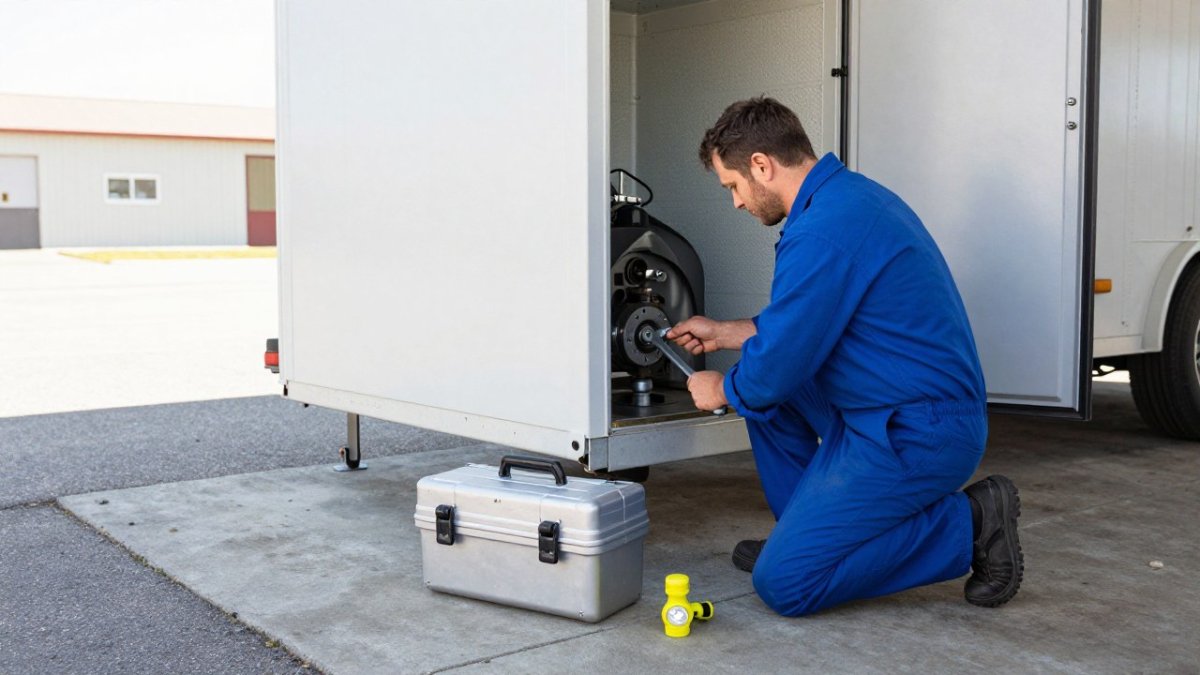
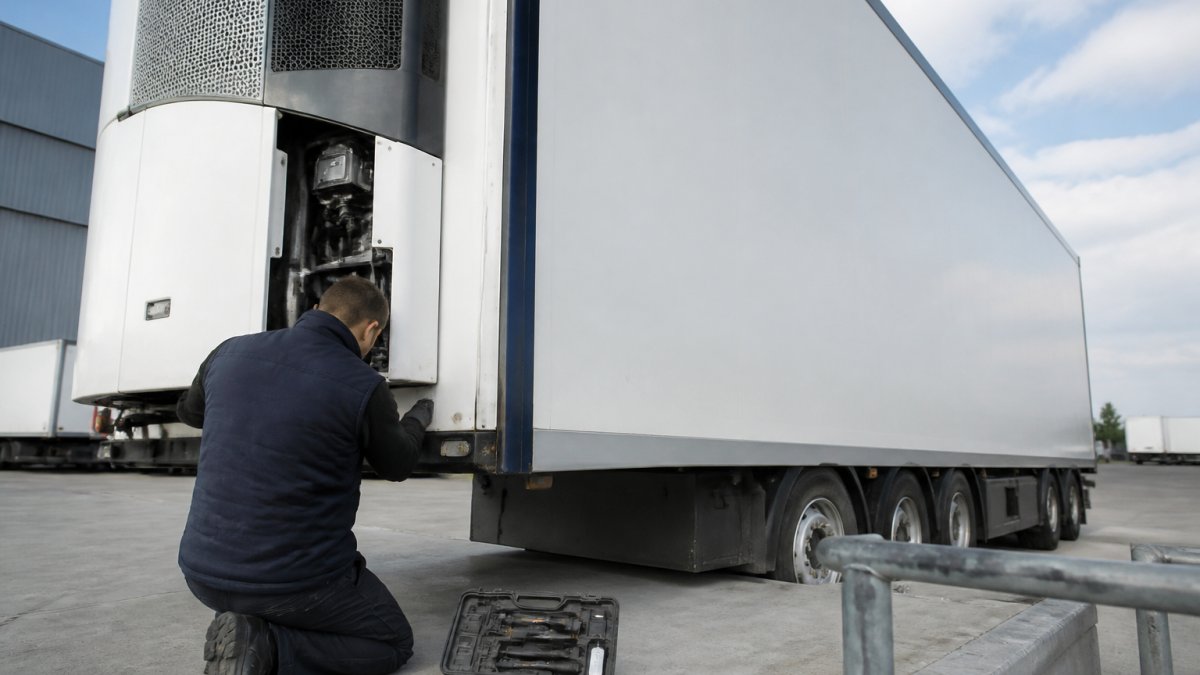
When equipment reliability fails, speed decides the outcome. When a reefer goes down, you can book mobile reefer diagnostics and repairs and get a technician moving toward you fast.
Downtime is not random. It is the sum of skipped checklists, loose schedules, and slow response. Tighten those, and your fleet stays cold and productive.
Frequently Asked Questions
How often should a transport refrigeration unit be serviced?
Most fleets schedule a full transport refrigeration unit preventive maintenance service every 1,000 to 2,000 operating hours, or roughly every three to six months depending on usage. Units running long-haul routes or operating in high-heat conditions need shorter intervals. Between full services, drivers should run a pre-trip inspection on every load: check refrigerant levels, belts, hoses, and confirm the unit holds the set temperature before the doors close. Consistent service intervals are the single biggest factor in reducing refrigerated transport downtime.
What should a driver do if a reefer unit stops cooling mid-route?
Pull over safely, confirm the fault code on the unit controller, and check the obvious causes first: a tripped breaker, a loose belt, or a unit switched out of continuous mode. Note the cargo temperature and how long the unit has been down. Then call for mobile reefer repair rather than driving on. A loaded trailer warms quickly in summer, and every hour of delay raises spoilage risk. Keep the doors closed, avoid opening the trailer to inspect cargo, and give the technician the fault code and unit model so parts can be matched before arrival.
How can fleet managers reduce the cost of reefer downtime?
Track downtime hours and mean time to repair for every unit, then rank failures by cause. Most fleets find a small number of repeat offenders, usually older units or ones overdue for service, drive a large share of lost hours. Moving those units onto a stricter preventive maintenance schedule and adding real-time temperature monitoring with remote alerts usually cuts unplanned downtime. Weighing reefer repair costs against the value of spoiled loads and missed deliveries makes the case for planned service clear.
Can mobile repair really respond fast enough to save a load?
It depends on the provider's coverage and parts stock. A mobile service that carries common parts on the truck and operates 24 hours can often diagnose and repair on site in a single visit, which matters when a loaded trailer is sitting in summer heat. Ask any provider how many parts they stock on the vehicle, and what their average response time is for after-hours calls.
Comments