How to Calculate the Average Cost of a Reefer Unit Breakdown
Last Updated: November 13, 2026
Quick Summary
The average cost of a reefer unit breakdown depends on the failed component, labor hours, and emergency premiums, so no single average is reliable for budgeting. A reefer unit breakdown ranges from under one hundred dollars for belts and filters to low five figures for compressor or engine work, plus downtime costs.
Compressor replacement runs high four figures to low five figures with 6 to 12 labor hours.
Electrical and control faults cost low hundreds to low four figures with 1 to 6 labor hours.
After-hours or roadside calls can carry additional charges, so ask for a written estimate.
A single compressor failure can absorb a year of maintenance savings.
Divide repair cost by expected remaining miles and compare it to replacement cost per mile.
What will your next reefer breakdown cost?
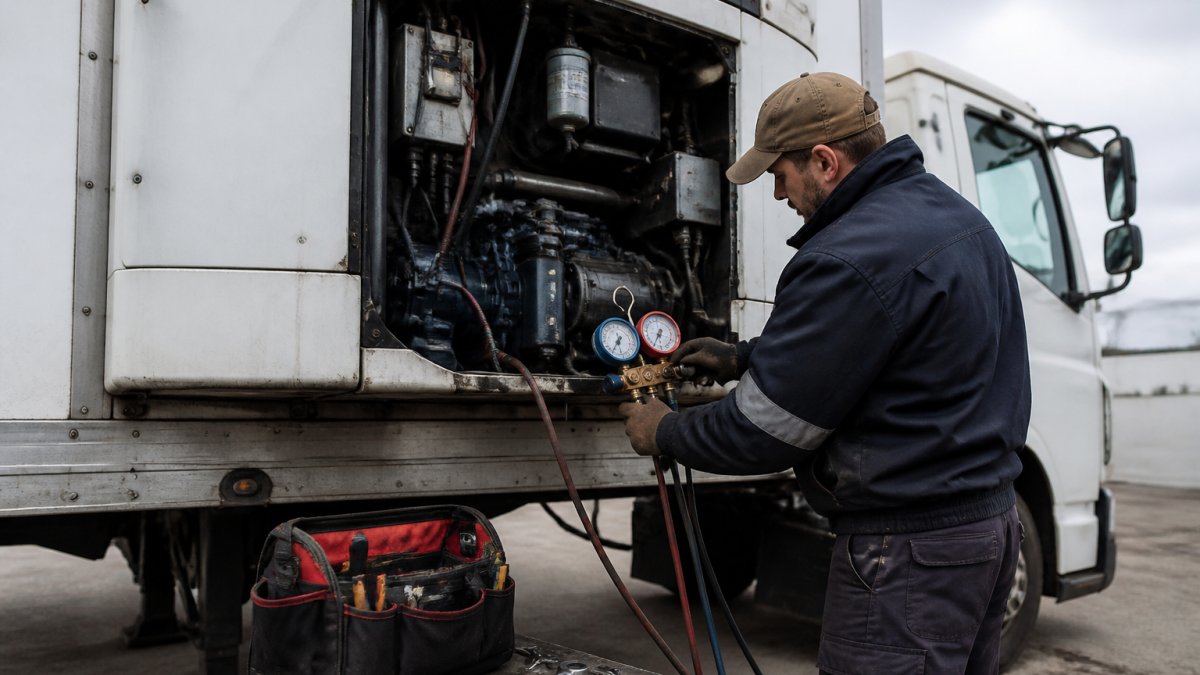
Platinum TRS provides 24/7 mobile reefer repair with dealer-level techs and parts on-site.
Table of Contents
What an Average Reefer Unit Breakdown Actually Costs
The average cost of a reefer unit breakdown depends on the failed part, the labor involved, and when the failure happens. Most breakdowns fall into a predictable set of components, and each one carries a different repair bill.
A reefer unit breakdown is any failure that stops a transport refrigeration system from holding its set temperature during a haul. That definition matters because it frames the cost correctly. You are not just paying for a repair.
Three things drive the total:
The component that failed and how deep the damage runs
The labor rate and parts availability where you are stranded
The time the unit sits idle before it is fixed
Below, we will show you how to estimate each piece, so you can budget for a breakdown before the next one hits.
The Real Reefer Unit Repair Cost: Parts, Labor, and Emergency Premiums
Reefer unit repair cost is the sum of parts, labor, and a premium for emergency service. Parts pricing depends on the component and the brand. Labor depends on the technician's rate and how long the job takes. Emergency premiums apply when the repair happens outside normal hours or on the roadside.
Most guides stop there and hand you a single average. That average is close to useless for budgeting, because a control-sensor replacement and a compressor swap are not the same event. The practical approach is to itemize the repairs that actually happen, then add labor and the emergency premium on top.
Itemized Repair Cost by Component and Repair Type
The table below gives planning ranges for common repairs on a transport refrigeration unit. Treat the numbers as order-of-magnitude planning figures, not quotes. Actual invoices move with brand, unit model, part availability, and the labor rate in your market.
Repair Type | Typical Parts Range | Typical Labor Hours | What Drives the Range |
Compressor replacement | High four figures to low five figures | 6-12 hours | Compressor model, refrigerant recovery and recharge, whether the failure contaminated the system |
Diesel engine overhaul or rebuild | Mid four figures to low five figures | 10-20+ hours | Rebuild vs. reman vs. new, injectors and turbo condition, whether the block is serviceable |
Refrigerant leak diagnosis and repair | Low hundreds to low four figures | 2-8 hours | Leak location, copper line vs. coil vs. fitting, amount of refrigerant lost |
Electrical and control faults | Low hundreds to low four figures | 1-6 hours | Sensor vs. controller vs. wiring harness, diagnostic time dominates |
Belt, filter, and fluid service | Under one hundred to a few hundred | 1-3 hours | Whether bundled with scheduled service |
Door, gasket, and seal repair | Low hundreds | 1-4 hours | Trailer-side vs. unit-side, gasket length |
A compressor failure can sometimes reveal system contamination once the unit is opened, which may change the scope of the repair. Ask for the scope of any flush and filter-drier work up front so the estimate reflects it.
How Labor Rates and Parts Availability Move the Number
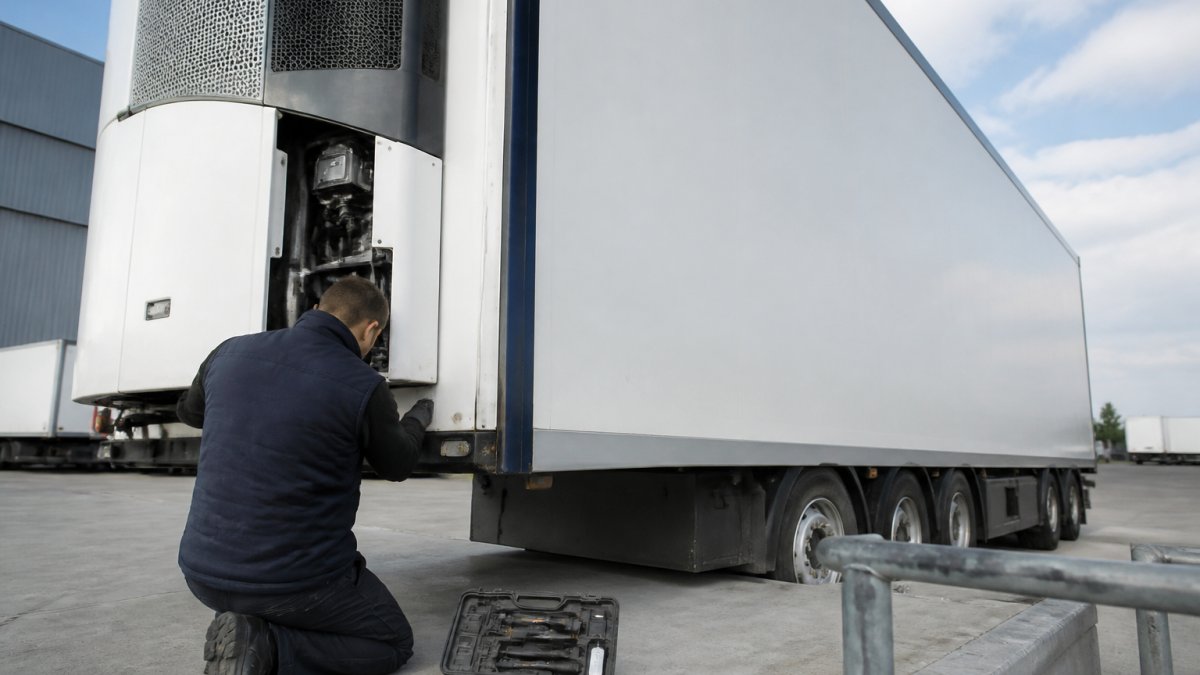
Labor rates vary by market and by whether the call is scheduled or emergency. Roadside repairs can carry a premium because the technician travels to you and works in the elements. Pricing depends on the repair, the unit, and when the call comes in; request a quote for current pricing.
Parts availability can move the timeline more than many managers expect. A part on the truck can mean a same-day fix, while a part on order can idle a unit for days.
For brand-specific work, our teams handle Carrier reefer repair and Thermo King repair with dealer-level expertise and parts carried on-site.
Cost Driver | What Moves It | Budget Impact |
Component failed | Compressor costs most, electrical least | High to low |
New vs. reman part | OEM new vs. remanufactured | Often the largest single line |
Labor rate | Market rate, emergency premium | Moderate to high |
Parts availability | On-truck vs. ordered part | Low to days of delay |
Time of failure | Business hours vs. 2 AM Sunday | Emergency premium |
Emergency and After-Hours Premiums
Emergency service is often priced differently because it falls outside normal scheduling and may involve travel. Expect that after-hours or roadside calls can carry additional charges, and ask for a written estimate that spells out any surcharges.
One way to avoid emergency premiums is to catch failures during a scheduled inspection, when work can be planned around the trailer's schedule.
Average Annual Maintenance Cost for a Reefer: What to Budget
Annual maintenance spending is generally far smaller than the cost of one major failure, which is a common reason fleets invest in preventive maintenance. A steady maintenance budget covers scheduled service, filter and fluid changes, and inspections that can catch small faults before they strand a trailer.
Some fleet managers skip preventive maintenance because reactive repairs have not broken anything yet. Reactive maintenance does not remove the cost; it can shift it to a less convenient moment, often with an emergency premium and freight on board.
A practical annual budget covers:
Scheduled service intervals by engine hours and runtime
Fluid, filter, and belt replacement
Inspection of the refrigeration system and copper components
A reserve for one unplanned repair per unit
Budgeting only for scheduled service and leaving no reserve is a common planning gap, since a single compressor failure can absorb a year of savings.
Reefer Downtime Cost: The Expense That Never Shows on the Invoice
Reefer downtime cost is the money a unit loses while it cannot haul. It never appears on the repair invoice, which is why fleets underestimate it. The repair bill is visible.

Downtime stacks up in several ways:
Lost hauling capacity while the unit is out of service
Late-delivery penalties and rescheduled loads
Spoiled or at-risk temperature-sensitive cargo
Overtime and rush charges to recover the schedule
The faster a unit is diagnosed and repaired, the shorter the downtime. That is why response time matters as much as the repair price. A cheaper repair that takes three days can cost more than a faster one that costs more up front.
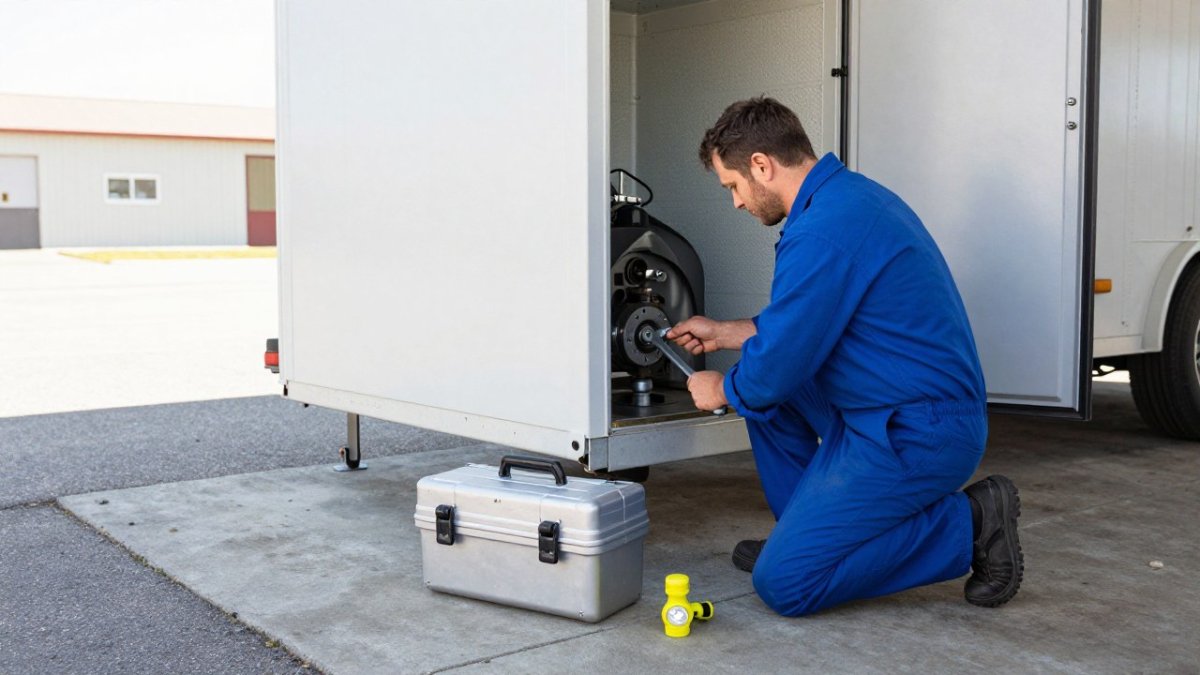
This is where mobile service can change the equation. Our 100% mobile service brings diagnostics and repairs to your location, and our large variety of on-site parts is intended to help units return to service sooner.
How Reefer Unit Lifespan Changes Your Cost per Mile
Reefer unit lifespan affects how far a purchase cost spreads across the miles you run. A longer-lasting unit spreads its upfront cost over more miles.
Cost Differences by Unit Age, Condition, and Engine Hours
Age and condition change repair cost in predictable ways. Older units fail more often, and their parts can be harder to source. High engine hours mean more wear on the diesel engine and compressor, the two most expensive components.
New units: low failure rate, high purchase cost, predictable maintenance
Mid-life units: rising repair frequency, best value if maintenance history is solid
High-hour units: frequent breakdowns, higher cost per mile, replacement often wins
Operating conditions matter too. A unit running hard duty cycles in hot weather works its refrigeration system harder than one on light, short routes. Temperature range and cargo type both push runtime and engine hours up.
Repair or Replace? A Decision Framework for Fleet Managers
Repair or replace comes down to cost per mile versus remaining service life. Use this framework to decide:
Estimate the repair cost for the current failure
Check the unit's engine hours and maintenance history
Estimate remaining service life at current duty cycle
Divide repair cost by expected remaining miles
Compare that figure to the cost per mile of a replacement unit
If repair cost per mile exceeds replacement cost per mile, replace
A common mistake is repairing a high-hour unit repeatedly because each single bill looks affordable. Added together, those bills often exceed the cost of a replacement. The framework forces you to look at the trend, not one invoice.
How to Build a Cost Estimate for Your Own Fleet
Build a cost estimate by itemizing the drivers instead of guessing a single number. Use this worksheet as a starting point:
Parts: list the likely components for your unit's age and hours
Labor: multiply estimated hours by your market labor rate
Emergency premium: add the roadside or after-hours surcharge
Downtime: estimate lost hauling hours times your revenue per hour
Cargo risk: factor in the value of temperature-sensitive freight
Add the pieces and you have a defensible estimate. Review it quarterly and update it as units age. The estimate is only as good as the maintenance history behind it, so keep service records current.
For most fleets, the fastest way to shrink the estimate is to shorten downtime. That means a partner who responds around the clock and arrives with the parts on hand.
Get a Mobile Breakdown Estimate Before the Next Failure
A breakdown is a when, not an if. If you want to know what a repair will cost and how fast we can reach you, start with a 24/7 emergency reefer repair request or confirm that our mobile reefer repair service area covers your locations.
At Platinum Transport Refrigeration Services, we built our service around the three things that drive breakdown cost: speed, parts, and expertise. Our 24-hour emergency repair service is designed to minimize downtime. Our 100% mobile service brings the repair to your trailer. Our dealer-level technicians carry a large variety of parts on-site.
The difference between a manageable repair and a costly one is usually how fast the unit gets back on the road. Let us help you plan for it now, so a breakdown never catches your fleet off guard. Get started with Platinum Transport Refrigeration Services and keep your cold chain moving.
Frequently Asked Questions
What does it cost to repair a reefer unit after a breakdown?
Repair cost depends on the failed component, the unit's age, and whether the call is an emergency. A minor fix like a sensor or belt is a small parts-and-labor job, while a compressor or copper component replacement runs much higher once refrigerant recovery, parts, and after-hours labor are added. Emergency premiums and travel charges push the total above a scheduled shop visit. Get a written estimate that separates parts, labor, and diagnostic fees before authorizing work.
What is the average annual maintenance cost for a reefer?
Annual maintenance cost scales with unit age, engine hours, and duty cycle. A newer unit on light duty needs little beyond scheduled preventive maintenance, while an older high-hour unit typically absorbs more in parts and labor each year. Budgeting a fixed amount per unit per year and tracking actual spend against it gives you a realistic baseline. Skipping service intervals usually raises the annual number rather than lowering it, because small faults turn into breakdowns.
How long does a reefer unit last before replacement makes more sense than repair?
Reefer unit lifespan depends on runtime, load profile, and how consistently preventive maintenance was performed. Units that run heavy duty cycles in hot conditions accumulate engine hours faster and reach the end of useful life sooner. The repair-versus-replace decision should weigh remaining service life against the cost of the next major repair, plus downtime exposure. When a single repair approaches a meaningful share of replacement cost and failures are clustering, replacement usually wins.
How can fleet owners reduce reefer downtime cost?
Downtime cost comes from spoiled cargo, missed delivery windows, and emergency labor premiums, so the fastest savings come from preventing failures and shortening recovery time. Stick to service intervals, watch engine hours, and address small faults before they strand a load. Consider a mobile repair provider that carries parts on site, since on-site service can reduce the need for towing or a depot visit. Track breakdown frequency by unit so repeat offenders get inspected or retired.
Comments