How to Get 24 Hour Reefer Repair Services Fast
Last Updated: October 26, 2026
Quick Summary
24 hour reefer repair services provide around-the-clock mobile diagnostics and repair for transport refrigeration units, delivered to wherever the trailer is parked rather than requiring you to tow it to a shop. At Platinum Transport Refrigeration Services, we run this service across the Tri-Cities with fully equipped mobile units, dealer-level technicians, and a broad parts inventory carried on board.
A genuine 24-hour service dispatches a technician that night, not a Monday callback.
Give the dispatcher your unit make, model, serial number, and exact fault code.
Mobile repair keeps the unit on site, avoiding towing and shop queue time.
Reefer repair cost depends on the failed component, time of day, travel distance, and parts availability.
Run the maintenance checklist between visits to catch failures before they strand a load.
Table of Contents
What 24 Hour Reefer Repair Services Actually Cover
A reefer breakdown at 2 AM does not care about your delivery schedule. That is why 24 hour reefer repair services exist: they are around-the-clock mobile diagnostics and repair for transport refrigeration units, delivered to wherever the trailer is parked rather than requiring you to tow it to a shop. At Platinum Transport Refrigeration Services, we run this service across the Tri-Cities with fully equipped mobile units, dealer-level technicians, and a broad parts inventory carried on board.
What that coverage includes matters more than the label. A genuine 24-hour service handles:
Emergency diagnostics for no-cool, short-cycling, and alarm-code faults
Compressor, condenser, and evaporator repairs
Refrigerant leak detection and recharge
Electrical and control board troubleshooting
Preventative maintenance scheduling between emergencies

The distinction between a real 24-hour operation and a call center that promises one is simple. Ask whether a technician is dispatched that night or whether you get a callback on Monday morning. That answer tells you everything.
Reefer Unit Diagnostics: What Happens Before Any Repair
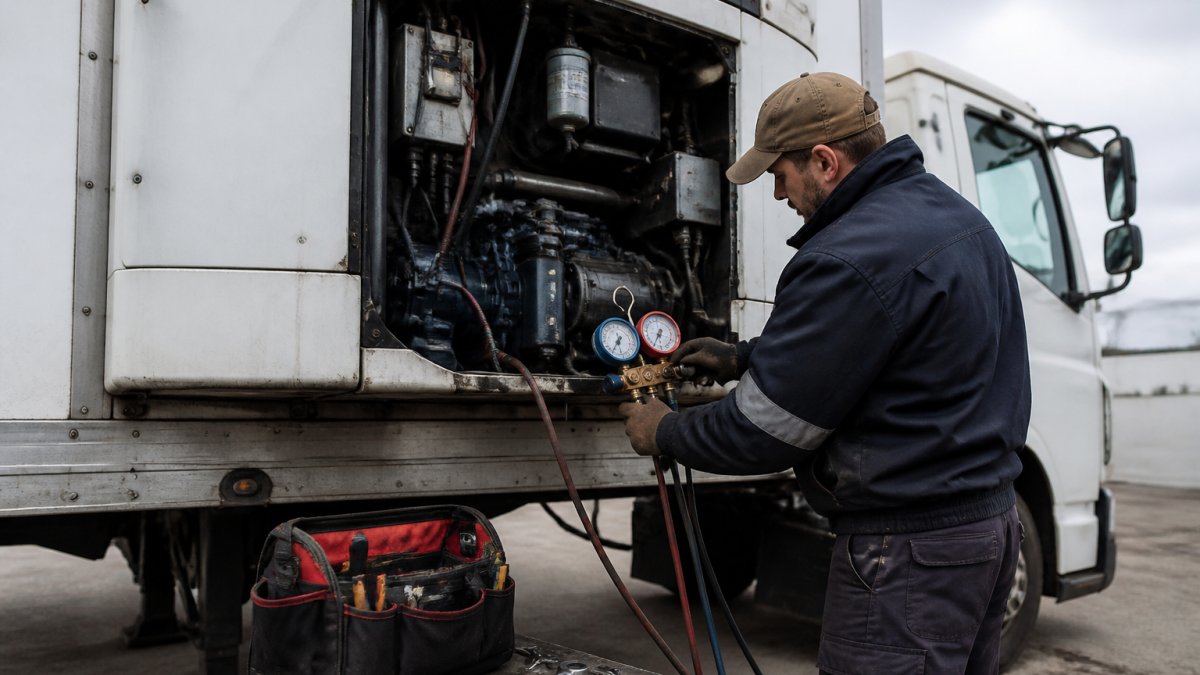
Reefer unit diagnostics is the structured fault-finding process a technician runs before touching a single component. Skipping it is how units get expensive. A proper diagnostic sequence looks like this:
Pull stored fault codes from the controller
Check refrigerant pressures against the unit's spec
Test compressor amp draw and clutch engagement
Inspect belts, fans, and coil condition
Verify sensor readings and control board output
A common mistake is replacing parts based on a symptom rather than a confirmed diagnosis. A unit that will not hold temperature could have a refrigerant leak, a failed sensor, or a stuck expansion valve, and each has a different fix and a different price. Diagnostics exist to separate those causes before anyone spends your money.
Dealer-level scan tools matter here. Generic code readers often return a vague fault on modern Thermo King and Carrier controllers, while the manufacturer-level tool pinpoints the exact circuit. That is the difference between a one-visit repair and three.
Reefer Repair Response Time: What to Expect When You Call
Reefer repair response time depends on three things: your location, the time of day, and whether the provider runs its own mobile fleet or subcontracts. A provider with in-house trucks and stocked parts typically rolls faster than one dispatching from a distant depot.
When you call, give the dispatcher these details to speed things up:
Unit make, model, and serial number
The exact fault code showing on the controller
Whether the unit is completely down or just underperforming
Your location and load status
Honest providers will tell you a realistic arrival window rather than an optimistic one. Ask directly: "Is a technician dispatched now, or am I on a callback list?" A 2 AM Sunday call should get a real answer, not a voicemail. Response speed is exactly what you are paying the emergency premium for, so hold providers to it.
Mobile Repair vs. Hauling the Trailer to a Shop
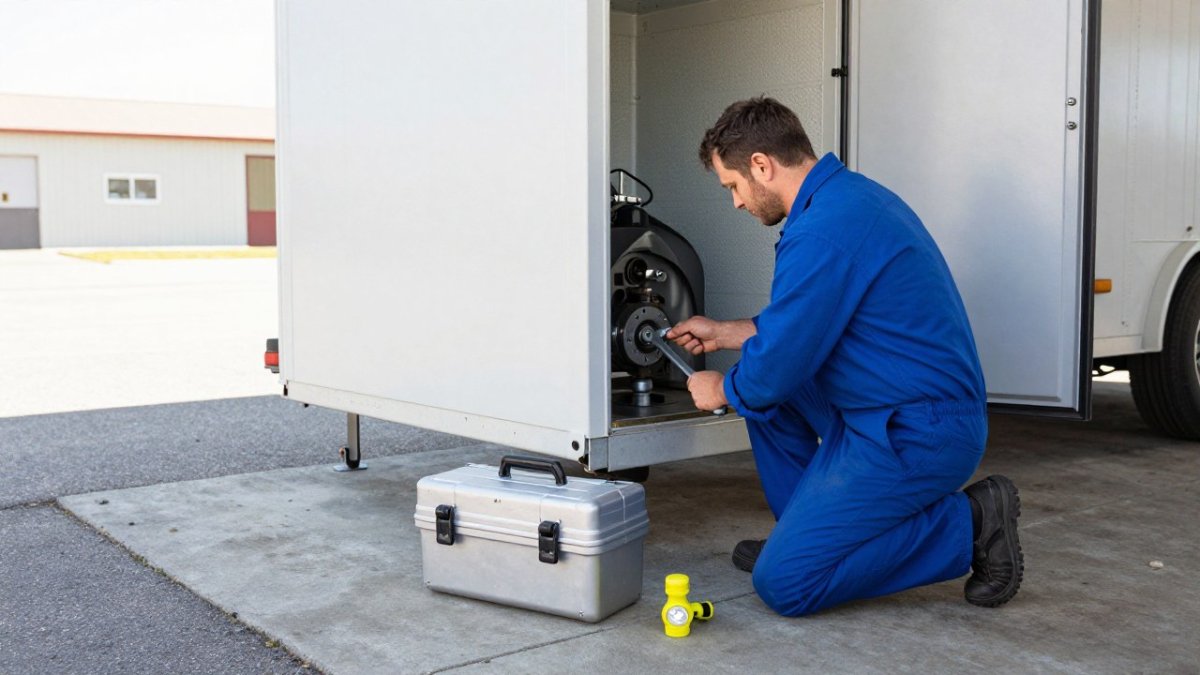
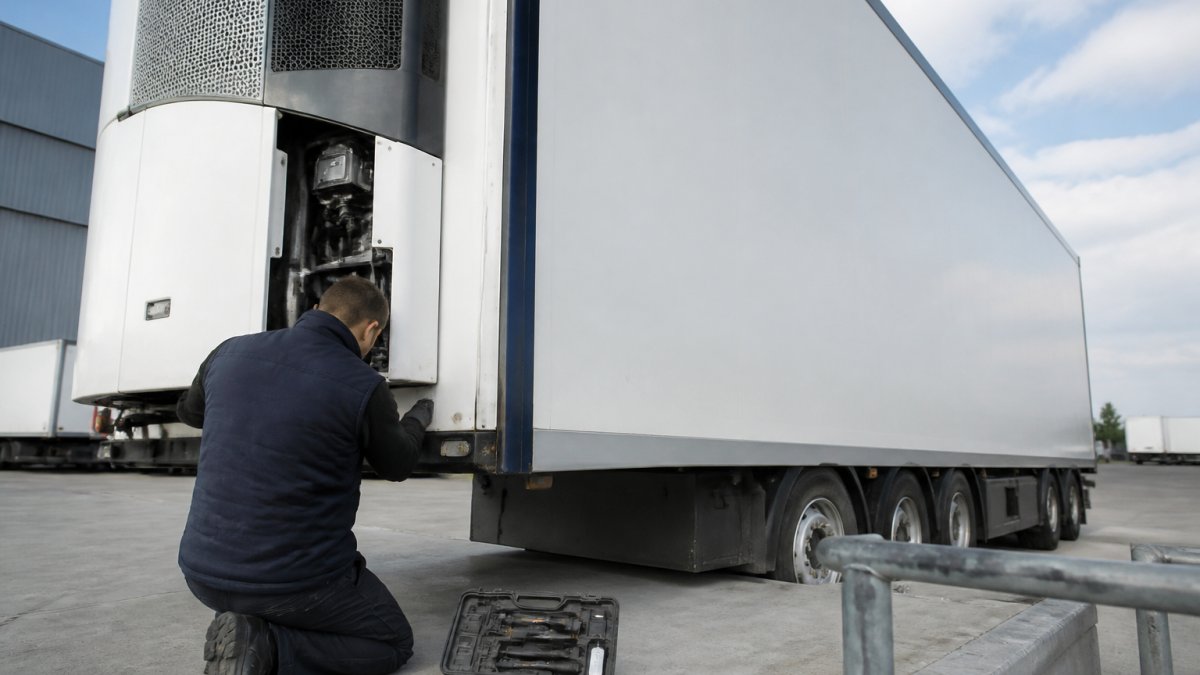
Mobile repair wins in almost every emergency, and the math explains why. Hauling a loaded trailer to a shop means finding a tractor, burning fuel, and losing hours before a wrench even touches the unit. Mobile service brings the shop to the trailer.
Factor | Mobile Repair | Shop Visit |
Downtime | Unit stays on site | Towing plus queue time |
Load handling | Load stays cold or transfers on site | Risk during transport |
Parts access | Technician carries common parts | Shop inventory |
Best for | Emergencies, multi-site fleets | Major overhauls, bench work |
The one case where a shop makes sense is a full compressor replacement or a bench rebuild that needs equipment a truck cannot carry. For everything else, mobile is faster.
A fleet spread across several locations is the scenario where mobile service earns its keep. One dispatch can reach multiple yards without moving a single trailer. If you are weighing that against your current setup, it is worth a direct conversation about transport refrigeration service for your fleet.
Reefer Repair Cost: What Drives the Bill Up or Down
Reefer repair cost is driven by four variables: the failed component, the time of day, travel distance, and parts availability. There is no honest flat number, and any provider quoting one sight unseen is guessing.
What pushes a bill up:
After-hours or weekend dispatch
A part that has to be ordered rather than pulled from the truck
Secondary damage from running a unit after a fault appeared
Long travel to a remote location
What keeps it down:
A technician who carries the common parts on board
Early diagnosis before damage spreads
Preventative maintenance that catches faults before failure
What we will do is explain the diagnosis and the repair options before work begins, so there are no surprises on the invoice. Ask any provider for that same clarity.
Your Reefer Maintenance Checklist Between Breakdowns
A reefer maintenance checklist is the cheapest insurance a cold chain has. Run this between service visits and you will catch most failures before they strand a load:
Check refrigerant sight glass for bubbles or moisture
Inspect belts for cracks, glazing, or slack
Clean condenser and evaporator coils
Verify defrost cycle runs and terminates correctly
Test door seals and curtain condition
Record controller fault history weekly
Confirm sensor and thermostat accuracy
Log run hours and schedule service by interval
The thing nobody tells you about reactive maintenance is that it always costs more than it looks. For ongoing maintenance tips and troubleshooting insights, explore the Platinum TRS blog. A unit that "is doing okay" until it fails usually fails at the worst possible moment, with a full load on board.
Call for 24 Hour Reefer Repair Before the Load Spoils
Every hour a reefer sits down is an hour your load is losing value, and a spoiled load costs far more than any repair. That is the trade-off worth weighing before the next breakdown, not after.
Platinum Transport Refrigeration Services runs 24-hour emergency mobile repair across the Tri-Cities, with dealer-level technicians and a large parts inventory carried on every truck. We come to your trailer, diagnose the fault properly, and get the unit cooling again with minimal downtime. Our 100% mobile service means no towing, no shop queue, and no wasted hours.
When the unit goes down, call (509) 547-5262 and get a technician dispatched. Get started with Platinum Transport Refrigeration Services and keep your cold chain moving.
Frequently Asked Questions
What does 24 hour reefer repair service include?
A 24 hour reefer repair call typically covers on-site diagnostics, electrical and refrigeration system testing, and repair of the failed component using parts carried on the mobile unit. Technicians check the compressor, refrigerant charge, controller codes, and sensors before replacing anything. If a part is not on the truck, you should be told upfront before work begins. Ask whether the service includes a post-repair temperature pull-down test so you know the unit holds setpoint before the trailer rolls again.
How quickly can a mobile reefer technician respond?
Reefer repair response time depends on your location, the time of day, and how many calls the provider is already handling. A 100% mobile provider based in your service area can often reach a unit faster than a shop that has to schedule a tow. When you call, ask for a realistic arrival window rather than a promise, and confirm whether after-hours calls carry a different dispatch priority. Give your exact location, unit make and model, and current fault codes to speed up the response.
Can a reefer unit be repaired on the roadside without towing it to a shop?
Most common failures, including controller faults, sensor failures, refrigerant leaks, and electrical issues, can be handled on site by a mobile technician with the right parts and diagnostic tools. Repairs that need a controlled shop environment, such as major compressor replacement or extensive system flushing, may still require a tow. A good mobile provider will diagnose first and tell you honestly whether the unit can be fixed where it sits or needs to be moved.
What drives reefer repair cost up or down?
Reefer repair cost depends on the failed component, how long the unit ran with the fault, travel distance, and whether the call falls outside normal business hours. A sensor or controller fix costs far less than compressor work. Catching a fault early through a reefer maintenance checklist usually keeps the bill smaller than waiting for a full breakdown. Ask for a diagnostic fee and parts estimate before work starts so there are no surprises on the invoice.
Comments