How to Maintain Cold Chain: A Practical Guide for Fleets
Last Updated: November 19, 2026
Quick Summary
Maintain the cold chain by keeping temperature-sensitive products within a validated range through storage, pack-out, transport, and receiving, and by treating it as a connected system that fails at its weakest link. Pre-cool cargo spaces, leave room for air circulation, inspect seals and refrigeration on a duty-cycle schedule, and monitor temperatures continuously with calibrated loggers.
Pre-cool the cargo space before loading and never load warm product into a cold unit.
Data loggers commonly record at fixed intervals of every 5 to 15 minutes during transport.
Set alarm thresholds slightly inside your validated range so you get warning before product is at risk.
Download and archive logs at delivery, not at month-end, so records stay defensible.
Record the time out of range, the temperature reached, and the product involved during an excursion.
Is your reefer unit ready for peak season?
Platinum TRS provides 24/7 mobile reefer repair and maintenance for temperature-sensitive fleets.
Table of Contents
Cold Chain Equipment: Storage, Transport, and Monitoring Tools
Cold Chain Temperature Monitoring and Recording That Holds Up
Packing and Transport: Keeping Temperature Stable on the Road
Cold Chain Temperature Excursion Response and Product Disposition
Building a Cold Chain Plan with Platinum Transport Refrigeration Services
What the Cold Chain Covers and Why It Fails
Cold chain management is the practice of keeping temperature-sensitive products within a validated range from the point of origin through storage, transport, and final delivery. The cold chain is not a single piece of equipment but a connected system, and it fails at the weakest link, not the strongest one. This guide covers how fleets and distribution teams keep that system intact, from equipment selection to excursion response.
The Four Links in Every Cold Chain
Every cold chain, whether it moves vaccines, produce, or chilled foods, depends on four sequential stages:
Refrigerated storage at the origin facility
Pack-out and staging before a unit is loaded
Transport in a temperature-controlled vehicle or insulated container
Receiving and final storage at the destination
A break at any stage affects the whole shipment. A perfectly maintained reefer truck cannot rescue product that sat on a warm dock for an hour before loading.
Where Cold-Chain Failure Actually Starts
Most cold-chain failures do not begin with a catastrophic equipment breakdown. They begin with small gaps: a door left open during staging, a pre-cooling step skipped because the driver was running late, a data logger that was never downloaded. A common mistake is treating transport refrigeration as the only control point. For a closer look at preventing loss at every stage, read how to reduce food waste in cold chain logistics.
Cold Chain Equipment: Storage, Transport, and Monitoring Tools
Cold chain equipment falls into three categories, and each needs its own maintenance schedule. Refrigerated storage covers walk-in coolers, freezers, and refrigerated warehouses. Transport equipment covers reefer units, insulated containers, and coolant packs. Monitoring equipment covers thermometers, data loggers, and continuous monitoring systems.
Fleets often over-invest in one category and neglect the others. A reefer unit with a failed door seal will lose temperature faster than a well-sealed older unit.
Cold Chain Temperature Monitoring and Recording That Holds Up
Temperature monitoring only counts if it produces records you can defend during an audit or a customer dispute. A reading taken once per shift proves very little. Continuous monitoring with automatic logging proves the full history of a shipment, including the periods nobody was watching. The practical question is not whether to monitor but which monitoring method fits each link in your chain, and how to prove the tool itself is trustworthy.
FreightWaves
Choosing Between Manual Logs, Data Loggers, and Continuous Systems
Most operations end up using all three methods at different points, and the trade-offs are real:
Manual logs (clipboard readings taken at set intervals) are cheap and require no infrastructure, but they capture only snapshots, depend on staff remembering to record, and are easy to backfill or lose. They work best as a backup record for short-duration storage, not as the primary evidence for a shipment.
Single-use and reusable data loggers record at fixed intervals (commonly every 5 to 15 minutes) and produce a downloadable history at delivery. They are the standard tool for transport because they travel with the product and create a time-stamped record independent of the driver. The trade-off is that nobody sees the data until the logger is downloaded, so they document excursions rather than prevent them.
Continuous monitoring systems with remote sensors and alarms send alerts in real time to a phone, email, or dashboard. They are the right choice for stationary storage, walk-in coolers, freezers, and warehouses, where an alarm gives someone time to respond. They cost more to install and require connectivity and a defined alarm-response procedure, or the alerts become noise nobody acts on.
A common pattern is to run continuous monitoring at fixed storage locations and data loggers on every shipment, with manual checks as a cross-check during loading and receiving. That combination covers the periods nobody is watching without paying for real-time telemetry on every pallet.
Calibration, Alarms, and Logger Placement
Every thermometer and data logger drifts over time, so calibration on a fixed schedule is not optional.
Set alarm thresholds slightly inside your validated range so you get warning before product is actually at risk.
Placement matters as much as the device. A single sensor near the door of a cooler reads the warmest spot, not the product temperature; a sensor near the evaporator reads the coldest.
Downloading, Archiving, and Record Retention
Download and archive logs at delivery, not at month-end, because a logger that overwrites its own memory has no evidentiary value.
Watch out: treating a logger download as a formality is how excursions get discovered weeks later with no way to establish when the product left range, download and review at receiving, while the shipment can still be quarantined.
Here is how the three monitoring methods compare on cost, coverage, and what they actually prove.
Method | Best for | Key difference |
Manual logs | Backup record for short-duration storage | Cheap snapshots; easy to backfill or lose |
Data loggers | Transport, travelling with the product | Record every 5 to 15 minutes; document excursions, not prevent them |
Continuous monitoring systems | Stationary storage: coolers, freezers, warehouses | Real-time alerts; cost more and need connectivity |
Packing and Transport: Keeping Temperature Stable on the Road
Stable temperature during transport depends more on preparation than on the reefer unit's capacity. Pre-cool the cargo space before loading, never load warm product into a cold unit, and leave space for air circulation around pallets.
For insulated containers, condition coolant packs fully before use and pack them so they do not sit directly against temperature-sensitive product. A common mistake is overfilling a container to save space; the result is reduced air circulation and uneven temperature.
Refrigerated Transport Maintenance That Prevents Excursions
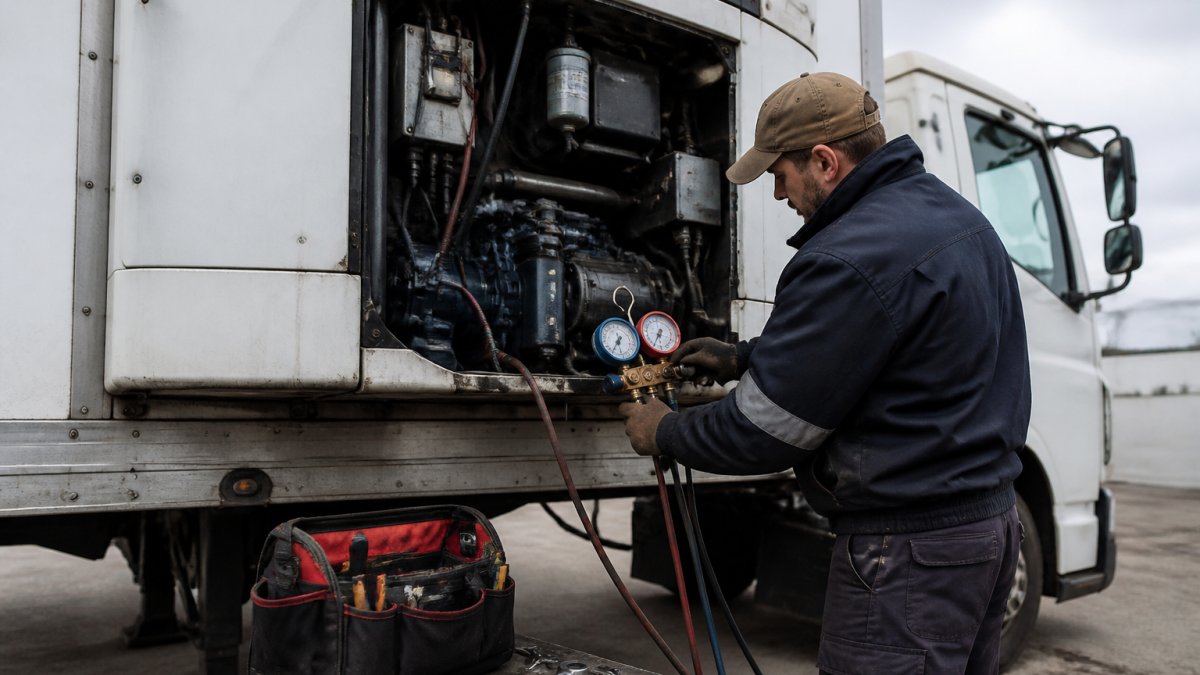
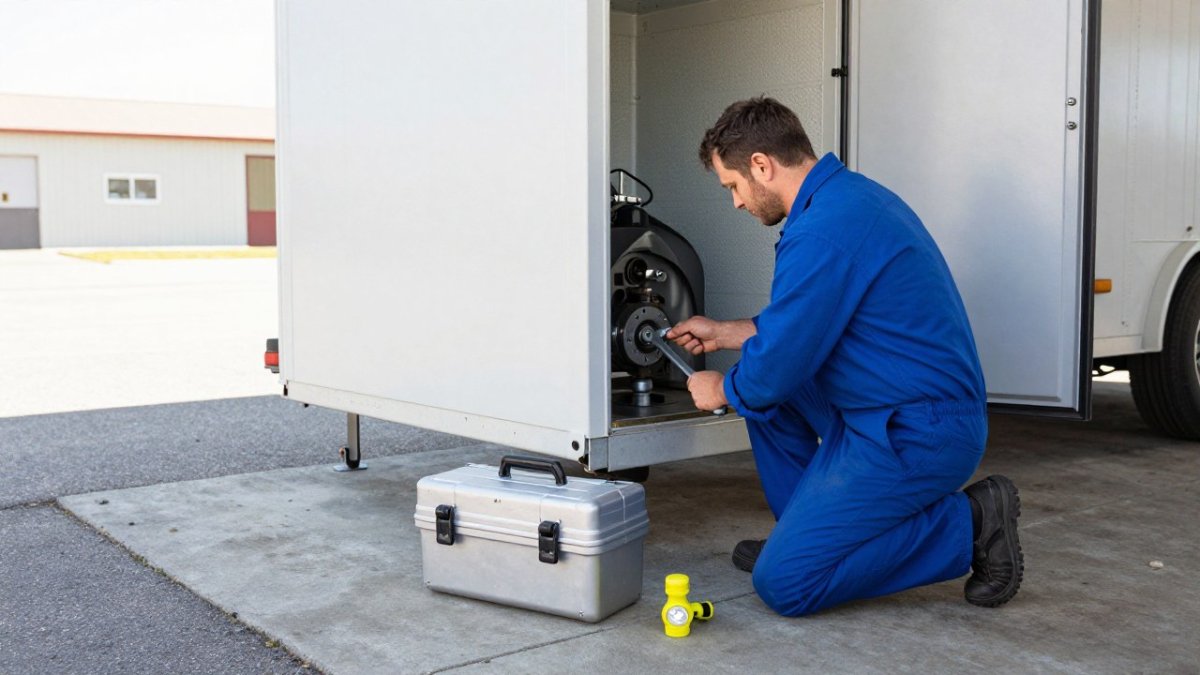
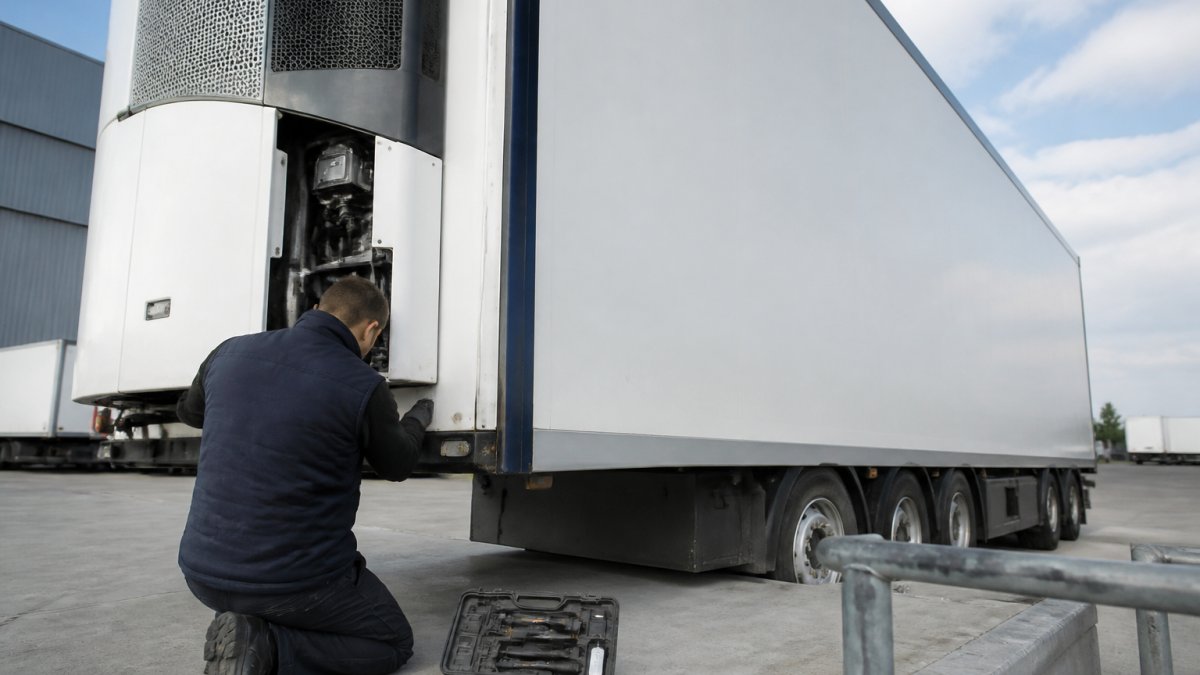
Preventive maintenance is the cheapest excursion response available. A scheduled inspection catches a failing door seal, a low refrigerant charge, or a clogged condenser before any of them cause a temperature excursion on the road.

Watch out: skipping pre-trip checks because a unit "ran fine yesterday" is the single most common cause of avoidable roadside failures. For a deeper inspection schedule, see our complete reefer unit maintenance guide, and if you are already seeing warning signs, review signs your transport refrigeration needs service before a small fault becomes a loaded trailer full of loss.
Cold Chain Temperature Excursion Response and Product Disposition
An excursion is any period where product moved outside its validated temperature range. The response has three parts: stop the exposure, document the event, and decide disposition. Do not skip the second step under pressure.
Disposition decisions belong to the product owner and, for regulated goods, to the applicable guidance, not to the driver. For an active excursion, our 24/7 emergency reefer repair team can dispatch a mobile unit and get the equipment back to temperature while you handle the product decision.
Contingency Planning, Documentation, and Staff Training
A cold chain plan that assumes everything works is not a plan. The sections above cover keeping equipment and monitoring sound during normal operation; this section covers what happens when normal operation stops, power loss, equipment breakdown, severe weather, transport delays, and how to document the response so it holds up in an audit or a customer claim. A useful plan goes further than "have a backup plan." The practical version names the failure modes, the decision authority, and the records.
Building a Contingency Plan Around Real Failure Modes
Write the plan around the events that actually take product out of range, not around a generic emergency:
Power loss at a storage site. Identify backup power (generator, transfer switch) and the load it can carry, or a pre-arranged backup storage location with capacity and a transfer procedure. Know how long the space holds temperature with the doors closed, that window, not the generator's fuel supply, is your real response time.
Refrigeration equipment breakdown. Keep the emergency service contact and account number posted at the unit, and pre-identify a mobile refrigeration unit or a backup space. For transport, a dispatched mobile unit can hold product at temperature while the equipment is repaired.
Severe weather and road closures. Build route and schedule buffers for seasonal risk, and decide in advance whether a delayed shipment is held, rerouted, or returned to storage rather than left on a dock.
Each entry should name who decides, who executes, and what triggers escalation. A plan that lists contacts but not decision authority stalls in the first ten minutes of an outage.
Audit-Ready Documentation
Auditors and customers look for a consistent record set, not a perfect one. Keep these in one place with a defined retention period:
Standard operating procedures for each stage, receiving, storage, pack-out, transport, and excursion response, with a version number and an effective date.
Temperature records from continuous monitoring and data loggers, downloaded and archived per shipment or lot.
Calibration records for every thermometer and logger, with the date and result of the last check.
A simple structure, a binder or shared folder organized by record type, with a cover sheet listing the retention period, is enough to make an audit walkthrough straightforward. The goal is to be able to answer "show me the record" without searching.
Staff Training That Sticks
Loading dock crews, drivers, and warehouse staff all touch the cold chain, and each needs to know the standard operating procedures for their stage.
Watch out: a contingency plan that has never been rehearsed tends to fail at the handoff, the backup site was never confirmed, the generator was never load-tested, or the on-call decision-maker was never told they were on call, so run a short drill each season and fix what breaks.
Building a Cold Chain Plan with Platinum Transport Refrigeration Services
A working cold chain plan combines equipment maintenance, monitoring discipline, and a rehearsed response to failure. That is where Platinum Transport Refrigeration Services fits.
If you are still relying on reactive maintenance, the question is not whether an excursion will happen but when. Browse our blog for ongoing maintenance and troubleshooting guidance, or call us to schedule a fleet review.
Reactive maintenance feels cheaper until the first loaded trailer sits at the wrong temperature.
Frequently Asked Questions
What temperature should a cold chain be maintained at?
The target temperature depends on the product. Refrigerated goods such as produce, dairy, and many pharmaceuticals are typically held between 2°C and 8°C (roughly 35°F to 46°F), while frozen products stay at -18°C (0°F) or colder. Vaccines often require 2°C to 8°C with no freezing. Set your range from the product label or manufacturer instructions, then verify your refrigeration unit holds it across a full delivery cycle, not just at startup.
How often should cold chain temperatures be monitored?
Continuous monitoring with a data logger is the standard for anything high-value or regulated, because it catches overnight and weekend excursions that spot checks miss. At minimum, record temperatures at loading, during transit at set intervals, and at delivery. Manual thermometer checks twice a day work for small static storage, but they leave gaps. Pair continuous monitoring with alarm thresholds so staff are alerted before product is compromised.
What should you do after a cold chain temperature excursion?
Quarantine the affected product first, then pull the temperature log to establish how long it was out of range and how far it drifted. Check the product's stability data or label instructions to decide whether it can be released, relabeled, or must be discarded. Document the event, the disposition decision, and who approved it. For vaccines and pharmaceuticals, follow the manufacturer's and regulator's guidance rather than guessing, and never ship product whose safety is uncertain.
How do you maintain a cold chain during transport?
Pre-cool the cargo space before loading, pack with validated coolant packs and insulated containers, and keep the unit running through every stop. Load product so air can circulate around it, and avoid opening doors longer than necessary. Use a data logger inside the load, not just on the unit display, so you have proof of conditions at the product. Confirm your refrigerated transport maintenance is current before the run, since a marginal unit fails fastest on the hottest day.
What equipment is needed to maintain the cold chain?
You need temperature-controlled storage (refrigerators and freezers with reliable air circulation), a calibrated thermometer or continuous data loggers, insulated containers and coolant packs for transport, and a working refrigeration unit on every vehicle. Backup power or a backup storage option covers outages. Add written standard operating procedures and staff training so the equipment is used consistently. Calibrate monitoring devices on a set schedule and keep the certificates for audits.
Comments