How to Reduce Food Waste in Cold Chain Logistics
Last Updated: November 16, 2026
Quick Summary
Reducing food waste in cold chain logistics starts with real-time temperature monitoring, two-tier alerts, and a written excursion protocol with a named owner at each step. Pair that with preventive reefer maintenance, FIFO rotation, and correct loading and packaging to protect perishables.
Set a warning tier around 2°F drift for 15-30 minutes and a critical tier at 5°F or beyond 30 minutes.
Confirm every excursion reading with a second sensor or handheld probe before acting.
Pre-cool trailers and load only product already at temperature to avoid overloading the unit.
Label every pallet with a receipt date and load oldest stock at the door first.
Start small: add two data-logging sensors per trailer and write an excursion protocol in month one.
Is your reefer ready for the next load?
We provide 24-hour mobile reefer repair and maintenance to keep your cold chain running.
Table of Contents
Why Food Waste Happens in Cold Chain Logistics
Food waste in cold chain logistics usually comes from broken temperature control, not from bad planning. A single failed reefer unit, a slow door seal, or a missed alarm can spoil an entire load before anyone notices. Across refrigerated fleets, the pattern is often the same: the product was fine when it loaded, and ruined when it arrived.
The causes repeat:
Temperature excursions during loading, transit, or delivery
Weak monitoring that catches problems hours too late
Poor loading practices that block airflow
Reactive maintenance that fixes units only after they fail
Cold chain logistics is the practice of keeping perishable products within a safe temperature range from harvest or production through storage, transport, and delivery. Every gap in that chain shortens shelf life. For a deeper library of troubleshooting and maintenance content, browse our blog for related refrigeration guidance.
Temperature Monitoring in Cold Chain Logistics: Real-Time Visibility
Real-time temperature monitoring in cold chain logistics means tracking product and air temperature continuously, not checking a gauge at each stop. Visibility turns a surprise loss into a fixable alert, but only if the alert is tied to a written response, an owner, and a disposition decision. Many operators already have sensors; what matters most is what happens in the minutes after a reading drifts.

IoT Sensors and Automated Alerts
IoT sensors log temperature and humidity and push alerts when readings drift outside range. Place sensors near the door, mid-trailer, and at the rear to catch warm spots; door-side sensors catch the most common failure (an open or poorly sealed door), while rear sensors catch warm air pulled in during multi-stop routes. Automated alerts should reach a phone, not just a dashboard nobody watches.
Set alert thresholds in two tiers rather than one:
Warning tier: a drift of roughly 2°F above the product's target range sustained for 15-30 minutes. This is a nudge to check the door, the unit, and the load, not a full emergency.
Critical tier: a drift of roughly 5°F or more, or any reading outside range that persists past 30 minutes. This triggers the escalation protocol below.
These are starting points, not regulations. Confirm exact tolerances with the shipper and the product label, because leafy greens, berries, dairy, frozen goods, and pharmaceuticals all tolerate different drift before quality is compromised.
Responding to Temperature Excursions
An excursion is any period when product temperature leaves its safe range. The response should be a written protocol with a named owner at each step, not improvisation:
Confirm the reading. Cross-check with a second sensor or a handheld probe before acting. A single bad sensor causes more false alarms than a real fault.
Identify the cause. Door left open, unit fault, airflow blockage, defrost cycle stuck on, or a sensor that has drifted out of calibration.
Escalate to a named owner. The driver owns the first check; the dispatcher owns the decision to divert; the quality lead owns the disposition call. Write these names into the protocol so nobody waits for permission.
Stabilize the load. Close doors, clear airflow, restart the unit, or move product to a working unit or cold room if the drift continues.
Decide disposition. Product that stayed within its safe range can ship. Product that crossed the critical tier needs a quality hold and a documented disposition decision, release, downgrade, or discard, made by the quality lead, not the driver.
Document and review. Record times, temperatures, the cause, the fix, and the disposition. Review excursion logs monthly to find repeat causes.
Watch out: skipping the second-sensor confirmation step is the most common way teams either overreact to a bad probe or underreact to a real fault, and both outcomes cost money.
When an excursion turns into a breakdown, you need 24/7 emergency reefer repair you can call immediately.
Preventing Food Spoilage During Transportation
Most food spoilage during transportation starts before the truck moves. Pre-cool the trailer, load only product that is already at temperature, and keep the unit running through stops.
ReFED
Packaging and Loading Practices That Protect Perishables
Use insulated packaging and gel packs for partial loads and last-mile drops.
Leave space for air to move around pallets.
Keep product off the floor and away from the doors.
Load frozen and chilled goods in separate zones.
Check door seals before every run.
A common mistake is loading warm product into a cold trailer and expecting the unit to pull it down. That overloads the system and puts the whole load at risk.
Transport Refrigeration Unit Maintenance That Protects Product
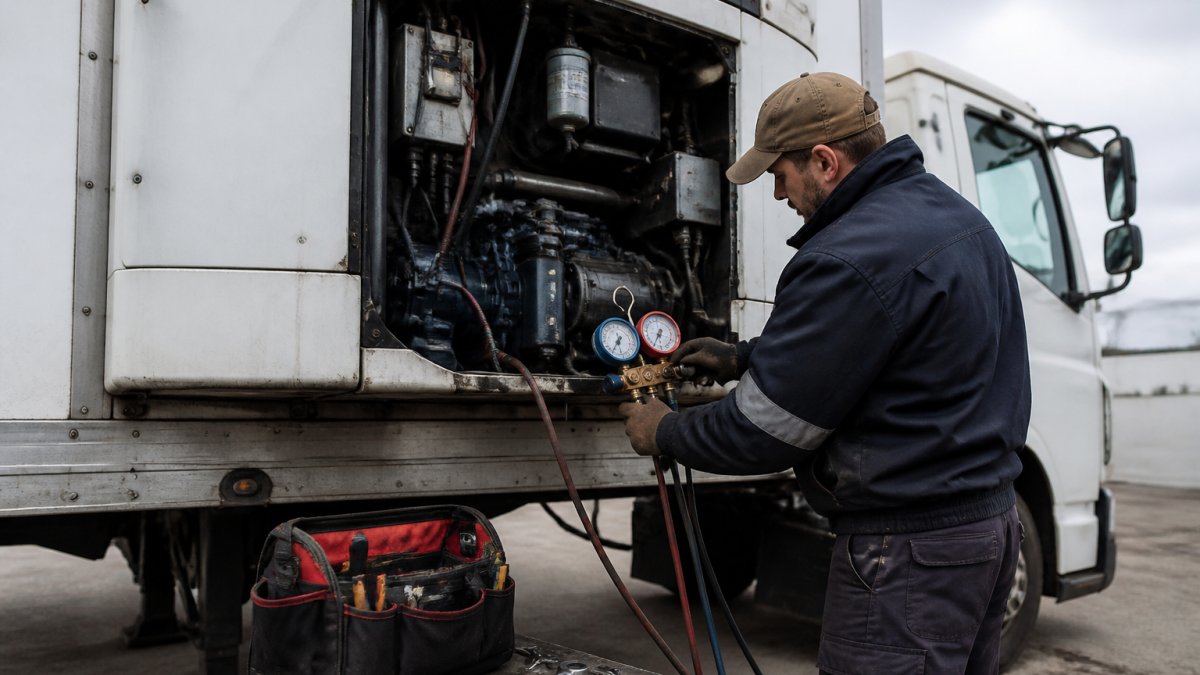
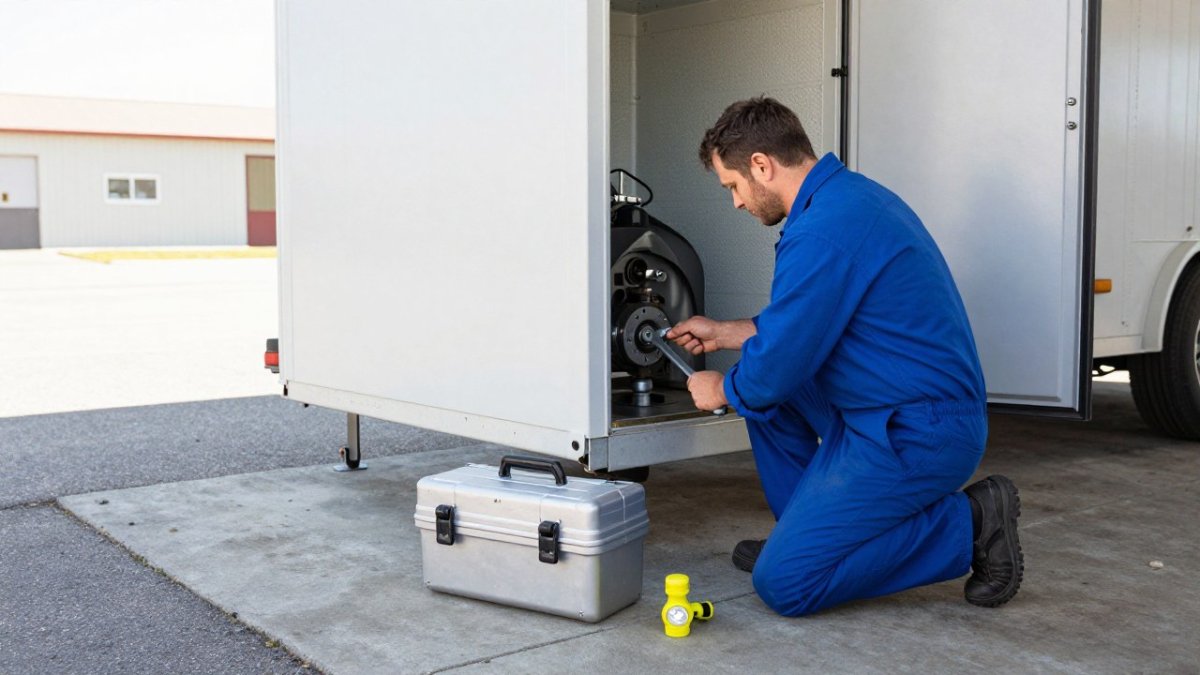
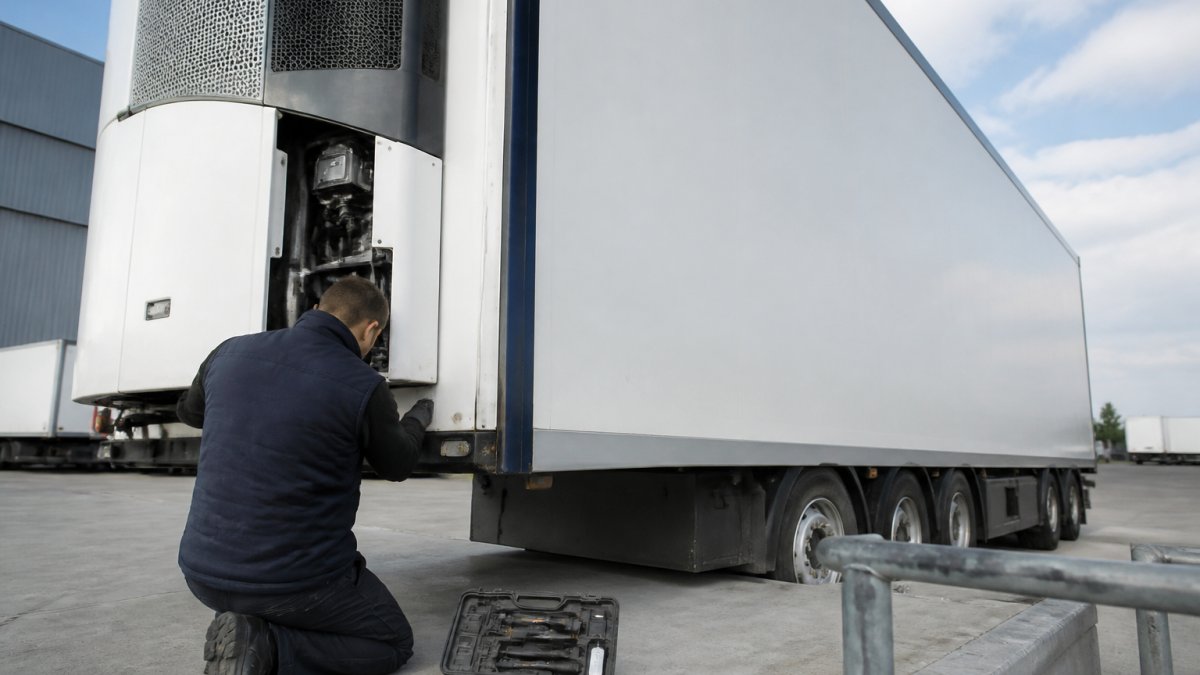
Transport refrigeration unit maintenance is the single most reliable way to prevent spoilage. A unit that is serviced on schedule holds temperature through the toughest routes.
Preventive checks should cover:
Refrigerant charge and leaks
Compressor and belt condition
Door seals and gaskets
Defrost cycles
Sensor calibration
For a full schedule, see our complete reefer unit maintenance guide. Skipping service to save time usually costs more in spoiled product than the service would have.
Cold Chain Inventory Management and FIFO Rotation
Cold chain inventory management pairs temperature control with stock rotation. FIFO, or first in, first out, moves the oldest product out first so nothing sits past its shelf life.
Label every pallet with a receipt date.
Load oldest stock at the door for first delivery.
Track inventory turnover by product line.
Use demand forecasting to avoid overstocking perishables.
Inventory management and temperature control work together. A perfectly cold trailer full of aging product still produces waste.
Product-Specific Temperature and Humidity Guidance
Different products need different conditions, and guessing costs money. Most competitors stop at 'keep it cold,' which is not actionable on a loading dock. The table below gives commodity-level starting ranges and the handling exceptions that cause the most spoilage in practice. Treat every number as a starting point to confirm with the shipper and the product label, and for regulated categories, verify against FDA food safety guidance before you load.
Product | Typical Storage Range | Typical Relative Humidity | Chilling Sensitivity and Handling Exceptions |
Leafy greens | 32-36°F | 90-95% | Not chilling-sensitive, but wilts fast in low humidity; avoid top-icing that crushes leaves |
Berries | 32-36°F | 85-90% | Highly perishable; avoid stacking that crushes lower pallets; mold spreads fast after any condensation event |
Dairy | 33-38°F | 80-85% | Sensitive to temperature swings more than absolute cold; keep defrost cycles from spiking air temperature |
Frozen goods | 0°F or colder | Not humidity-controlled | Any thaw-and-refreeze cycle damages texture and can breach food safety; treat partial thaw as a quality hold |
Bananas and tropical fruit | 56-60°F | 85-90% | Chilling-sensitive: below roughly 56°F causes skin blackening and uneven ripening; never load with frozen goods |
Tomatoes | 55-60°F | 85-90% | Chilling-sensitive below roughly 55°F; flavor and texture degrade even when the fruit looks fine |
Pharmaceuticals | Per label requirements | Per label requirements | Any excursion is a compliance event, not just a quality event; disposition requires the manufacturer's guidance |
Three exceptions matter more than the table itself:
Chilling-sensitive commodities. Bananas, tomatoes, and other tropical produce are damaged by temperatures that are perfectly safe for leafy greens. Loading them in the same zone as frozen goods is a common and expensive mistake.
Humidity is half the story. Leafy greens and berries spoil from moisture loss as much as from heat. A trailer that holds temperature but runs dry still produces shrink.
Defrost cycles spike air temperature. Dairy and other swing-sensitive products can be damaged by short air-temperature spikes during defrost even when product temperature stays in range. Place sensors to capture product temperature, not just air temperature near the evaporator.
Confirm exact ranges with the shipper and product label before you load, and record the confirmed range on the load sheet so the driver and the excursion protocol both reference the same number.
Measuring Results and Building a Smaller-Budget Implementation Plan
Measurement is what separates a real waste-reduction program from good intentions. Track spoilage rate, temperature compliance, and inventory turnover, then compare them month over month.
A small operator can start without a big budget:
Month one: add two data-logging sensors per trailer and write an excursion protocol.
Month two: start FIFO labeling and a maintenance calendar.
Month three: review spoilage data and adjust loading practices.
To understand what a breakdown really costs, read our guide on the average cost of a reefer unit breakdown.
Scheduling Reefer Service Before Your Next Shipment
Book service before the busy season, not during it. A pre-season inspection catches weak belts, low refrigerant, and worn seals while the schedule is still flexible.
Schedule preventive maintenance on a fixed calendar.
Keep a spare-parts list for your unit models.
Confirm your provider covers every location your fleet runs.
Check our reefer repair service area to confirm mobile coverage before you book. A unit that fails on the road costs far more than one serviced on schedule.
Waste in a cold chain rarely comes from one big failure. It comes from small gaps: a warm load, a slow alert, a skipped service. Platinum Transport Refrigeration Services helps fleets close those gaps with 24-hour emergency reefer repair, 100% mobile service that comes to your unit, dealer-level expertise, and a large variety of parts carried on-site to cut downtime. Get started with Platinum Transport Refrigeration Services and keep your product at temperature from load to delivery.
Frequently Asked Questions
How does cold chain logistics help reduce food waste?
Cold chain logistics keeps perishable products within their required temperature range from harvest or production through delivery. Consistent temperature control slows spoilage organisms and enzymatic breakdown, extending shelf life. Real-time monitoring catches excursions before loads are ruined, and proper handling at each transfer point prevents gaps where product warms up. Together these practices cut the spoilage rate across storage, transport, and delivery, which is where most postharvest losses occur.
What are the most common causes of food spoilage during transportation?
The usual culprits are temperature excursions from a failing refrigeration unit, poor airflow from overloading or blocked vents, and delays at loading docks where doors stay open. Pre-cooling mistakes matter too: loading warm product into a cold trailer raises the whole load's temperature. Inadequate insulation and damaged door seals let heat in, and inconsistent monitoring means problems go unnoticed until delivery. Regular transport refrigeration unit maintenance and pre-trip inspections address most of these causes.
What should a carrier do when a refrigerated trailer has a temperature excursion?
Document the excursion immediately: time, duration, and the temperature range reached. Quarantine the load and assess the product against its safety limits rather than guessing. Notify the shipper and receiver so they can make a disposition decision. For high-risk items like pharmaceuticals or ready-to-eat foods, follow the applicable food safety rules before releasing anything. Then have the refrigeration unit inspected and repaired before the trailer returns to service, and review the monitoring data to find what failed.
How often should transport refrigeration units be maintained?
Many manufacturers recommend periodic scheduled inspections, plus a pre-trip check before each long haul; confirm the interval in your unit's service documentation. Units running in high-heat conditions or heavy duty cycles need more frequent attention. Between scheduled visits, watch for slow pull-down times, unusual compressor noise, and refrigerant leaks. Catching these early with preventive maintenance costs far less than a mid-route breakdown.
Comments