Reefer Unit Repair Parts Availability: A Fleet Guide
Last Updated: November 15, 2026
Quick Summary
Reefer unit repair parts availability is the single biggest variable in how long a refrigerated trailer sits idle, so build a unit-specific parts list from each data plate and confirm stock with your supplier before the busy season. Availability splits by part type: filters, belts, fan motors, sensors and fuses are fast movers a stocked service truck should carry, while compressors, condenser coils, controllers and receiver-driers are usually order items with varying lead times.
Photograph every unit's data plate and record model, serial number, refrigerant type, and component part numbers.
Confirm compatibility using four identifiers: unit model, serial number range, component part number, and superseded number.
Ask suppliers whether a part is branch stock, regional warehouse, or factory order to get a real lead time.
Use OEM parts for units under warranty, since aftermarket components can void coverage on the related system.
Ask mobile providers what they carry as standard stock, not what they can order.
Down a reefer part and losing loads?
Platinum TRS brings stocked mobile reefer repair to your yard, day or night, across the Tri-Cities.
Table of Contents
Why Parts Availability Decides Your Downtime
Reefer unit repair parts availability is the single biggest variable in how long a refrigerated trailer sits at the dock instead of hauling.
The stakes are concrete. A transport refrigeration unit holds a temperature band, and every hour outside it puts product at risk, for produce, dairy, and pharmaceuticals, exposure is measured in cases.
Below, we break down how to check availability before a breakdown, how to confirm the right part, and which parts you should never be without.
How to Check Reefer Parts Availability Before a Breakdown
The most reliable way to check reefer parts availability is to build a unit-specific parts list now, while everything is running, then confirm stock with your parts department before the busy season.
Start with the data plate, usually on the frame or inside the access panel. It lists the model, serial number, and refrigerant type, the three details that determine which replacement parts fit.
Building a Parts List From Your Unit's Data Plate
Photograph the data plate on every unit in your fleet and store the images in one shared folder. From each plate, record:
Model and serial number
Refrigerant type and charge
Compressor part number
Fan and blower motor numbers
Controller or microprocessor model
A common mistake is recording only the trailer make. The trailer and refrigeration unit are separate systems with separate part catalogs, and mixing them up is how fleets order the wrong component twice.
Once the list exists, ask your parts supplier directly: which of these SKUs do you stock, and which do you order? A supplier who carries a large variety of parts on the truck answers in minutes; one who does not will call everything a special order.
Reefer Unit Diagnostics: Confirming the Right Part
Reefer unit diagnostics means tracing a fault to the specific failed component rather than replacing parts until the symptom stops. A wrong diagnosis doubles downtime: you wait for a part you did not need, then wait again for the one you did.
Modern units store fault codes in the controller, pull them before touching anything.
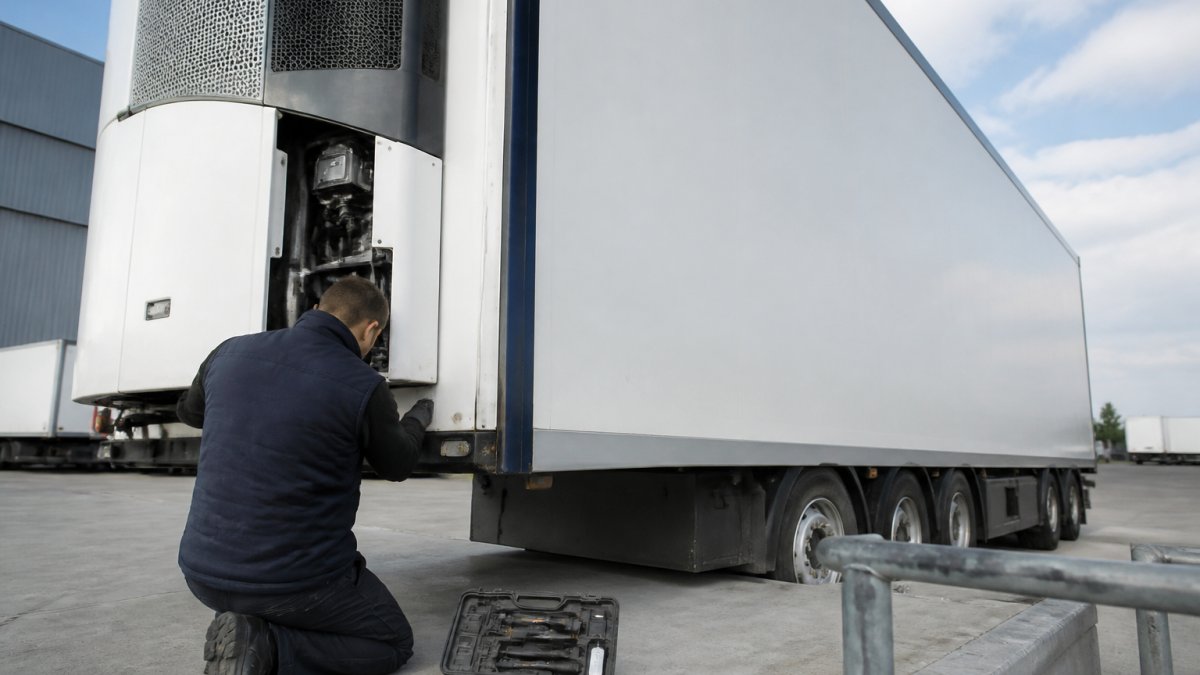
What most guides miss is confirming the part number against the unit's serial range, not just its model. For Thermo King units, Thermo King repair confirms and fixes the failed part. For Carrier units, Carrier reefer repair confirms and fixes the failed part.
OEM, Aftermarket, and Reman: Choosing Reefer Unit Replacement Parts
Reefer unit replacement parts come in three grades, and the right choice depends on the unit's age, its duty cycle, and whether it is still under warranty. OEM parts are built to the manufacturer's original specification. Aftermarket parts are produced by third parties to fit the same application. Remanufactured parts are original cores rebuilt to spec and sold at a lower price than new.
Part Type | Best For | Trade-off |
OEM (genuine) | Newer units under warranty | Highest cost, exact fit |
Aftermarket | Older units, non-critical components | Fit varies by supplier |
Remanufactured | High-cost items like compressors | Requires a core return |
For a unit still under warranty, genuine parts are the only sensible choice, because an aftermarket component can void coverage on the related system. For an older trailer running local routes, a quality aftermarket motor or fan is often the practical pick.
How to Identify a Compatible Part Before You Order
Compatibility is a chain of four identifiers that must all agree: the unit model, the serial number range, the part number stamped on the failed component, and the superseded number in the manufacturer's catalog. A part that matches the model but falls outside the serial range is the most common source of a second failed repair.
Start with the data plate, recording the model and serial number exactly as printed, including any revision suffix. Then read the number cast or stamped on the failed component itself, not the box, not an old invoice.
When you call a parts department, give all four identifiers in one message: model, serial number, component part number, and a photo of the data plate. A supplier who stocks a large variety of parts can usually confirm fitment in minutes; one who asks only for the trailer make is guessing.
Watch out: ordering from a photo of the old part alone is the most common cause of a second failed repair. A photo shows shape, not revision, and two visually identical coils can carry different part numbers for different serial ranges.
The Fitment Risks Nobody Prices In
Aftermarket fitment varies by supplier, and the variation is not always visible at delivery.
Keep the old part until the paperwork clears, and confirm the core acceptance criteria before sending it back, a cracked housing or burned winding can disqualify a core and turn the savings into a loss.
A practical rule: use OEM for anything under warranty or tied to a controller, use quality aftermarket for non-critical mechanical items on older units, and use reman only when you can hold the core and the unit's duty cycle justifies the savings.
Availability by Part Type and Urgency
Parts availability is not one number. It splits by part type, and the split tells you what to stock versus what to order.
Consumables and fast movers, filters, belts, fan motors, sensors, and controller fuses, are what a well-stocked service truck carries. They fail most often and cost least to hold.
Slow movers, compressors, condenser coils, controllers, and receiver-driers, are usually order items, and lead time varies.
Triage a Part in Three Questions
When a unit is down and you have a part number, ask three questions in order. First: is this a stocked item at the branch, or an order item? Second: if it is an order item, is it held at a regional warehouse or at the factory? Third: what shipping or transfer option gets it to the truck fastest without breaking the warranty or the core-return rules?
The answers sort the repair into three timelines. A stocked item means same-day or next-day repair if a technician is available. A regional warehouse item usually means overnight or next-day, depending on cutoff time and branch transfers. A factory order means a multi-day window, where downtime planning matters more than the part itself.
Watch out: a supplier who answers "we can get it" without naming where it is held is not giving you a lead time. Ask for the location and the transfer schedule, not the promise.
Shipping, Pickup, and Roadside Delivery
The logistics around a part often decide the repair more than the part itself. Local pickup is fastest but pulls a truck out of service. Branch transfer is reliable but not instant.
For each slow mover on your parts list, record which of these four options your supplier actually offers. A supplier who can do all four is telling you their inventory and logistics are real. One who offers only factory order is telling you something too.
Downtime Planning While You Wait
When a part is backordered, the repair timeline is out of your hands, but the cargo is not. Move the load to a running unit or standby reefer. Keep the trailer doors closed and monitor the temperature band rather than opening the unit repeatedly. For produce, dairy, and pharmaceuticals, document the temperature history from the controller so the receiver has a record if the band was breached.
Mobile Reefer Repair: Parts on the Truck, Not on Order
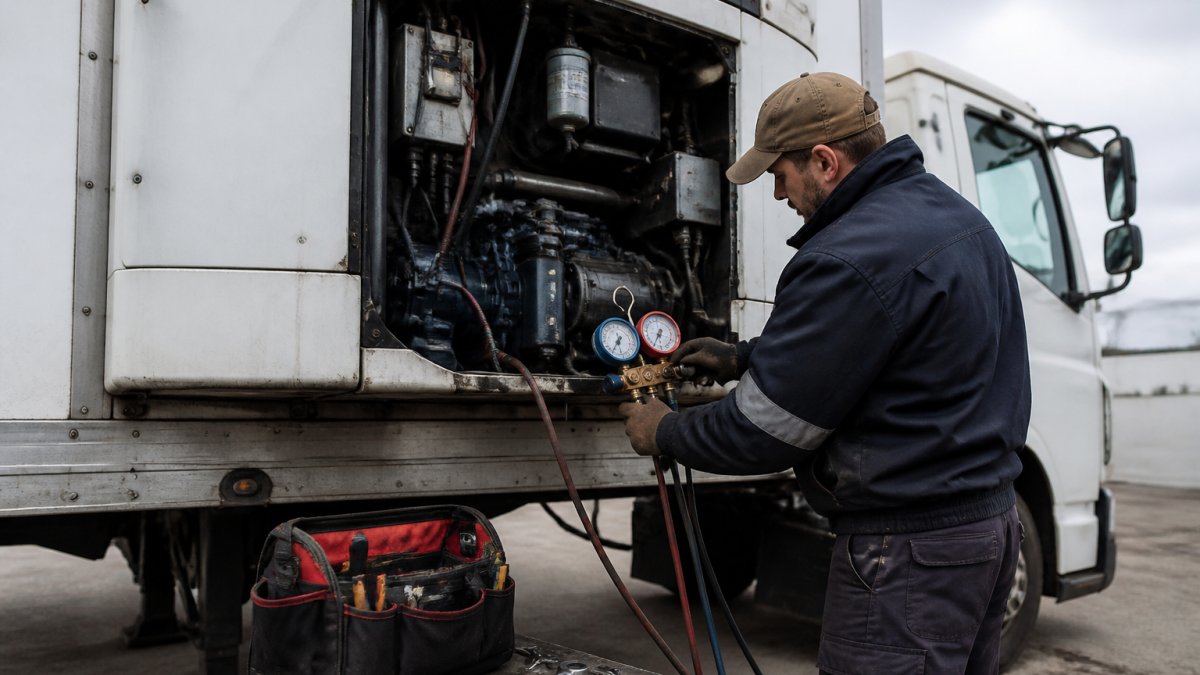
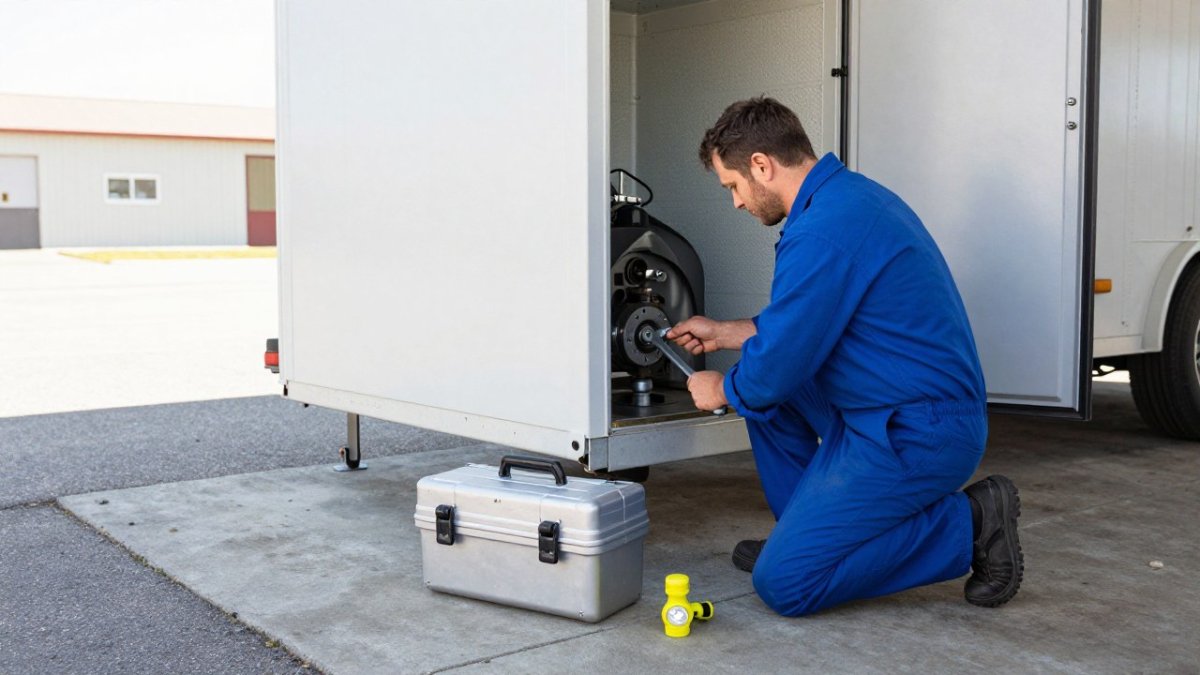
Mobile reefer repair solves the parts problem by bringing the inventory to the breakdown instead of the breakdown to the inventory.

That model only works if the truck is genuinely stocked. Plenty of providers advertise mobile service and then order the part anyway, turning a same-day repair into a two-visit job.
For a breakdown that cannot wait, 24/7 emergency reefer repair puts a stocked truck on the road to your location.
Reefer Unit Maintenance That Prevents Parts Failures
Reefer unit maintenance is the cheapest parts strategy available, because the components that fail on the road are usually the ones that were due for service.
Build a preventive schedule around the unit's duty cycle, not the calendar alone. High-hour units on multi-stop routes need inspection more often than a trailer running two local deliveries a day.
Our complete reefer unit maintenance guide walks through the full task list for each interval.
Call Platinum for Parts Availability and Mobile Repair
The gap between a one-day repair and a three-day repair is usually information: knowing which part you need, whether it is stocked, and how fast it can reach your trailer.
We provide 24-hour emergency mobile repair for commercial transport refrigeration units. Before you book, check our reefer repair service area to confirm mobile coverage for your yard or route.
When a unit goes down, the only question that matters is how fast the right part reaches the truck.
Frequently Asked Questions
How can I check whether a reefer repair part is in stock?
Give the parts department your unit's make, model, and serial number from the data plate, plus the part name or number if you have it. Ask for availability confirmation in writing, including the expected ship or pickup date, so you can plan around it instead of discovering the gap after the truck is already down.
How do I identify the correct replacement part for a reefer unit?
Start with the data plate on the unit, which lists the model and serial number the parts catalog is keyed to. From there, match the part number rather than the visual appearance, because similar-looking components can differ by voltage, thread, or mounting. Reefer unit diagnostics help here: a technician confirms which component actually failed before anyone orders. Ordering by symptom alone is how fleets end up with a part that fits the bracket but not the system.
Which reefer unit parts are most likely to need replacement?
The wear items come up most often: belts, filters, sensors, relays, fan motors, and refrigerant components exposed to vibration and heat. None of these are unusual failures, which is why carrying a small stock of common parts shortens repair turnaround. For older units, control boards and compressors climb the list. Tracking which parts your fleet has replaced in the past two years gives you a realistic shortlist for on-hand inventory.
Can a mobile reefer technician bring parts to the repair site?
Yes, when the service truck carries the parts. Mobile reefer repair works best when the technician arrives with a stocked inventory of common components, so a belt, sensor, or relay failure is fixed in one visit rather than two. For less common parts, ask whether the provider can confirm availability before dispatch. That single question separates a genuine one-trip repair from a diagnosis followed by a week of waiting.
What should I do if a reefer unit part is unavailable?
Ask for the expected lead time first, then decide whether to wait or move to an alternative. Options include a remanufactured or aftermarket equivalent, a temporary rental unit to protect the cold chain, or rerouting the load to a truck with working refrigeration. Reefer unit replacement parts availability varies by brand and unit age, so older equipment is where gaps appear. Keeping a contingency plan for your highest-risk units prevents a parts delay from becoming a spoiled load.
How often should reefer units be serviced to prevent parts-related downtime?
Most fleets service transport refrigeration units on a set interval tied to engine hours or mileage, with a fuller inspection before peak season. Reefer unit maintenance catches worn belts, clogged filters, and failing sensors before they strand a load. The interval that fits your operation depends on duty cycle and unit age, so ask your service provider to set it based on your routes rather than a generic schedule. Consistent servicing is cheaper than emergency parts replacement.
Comments